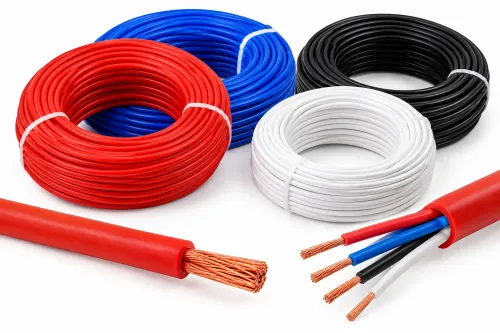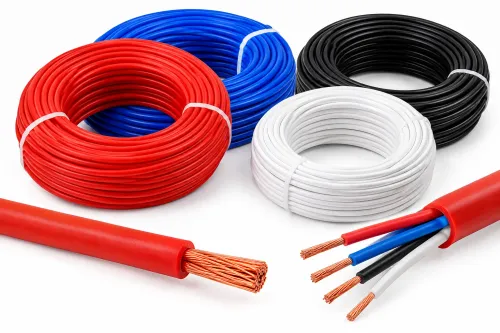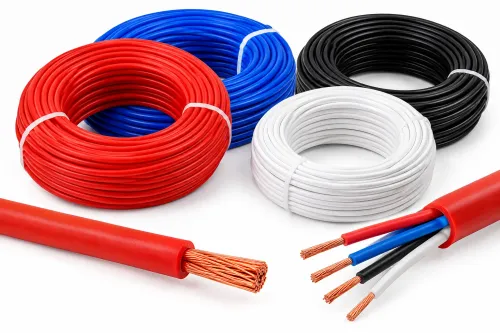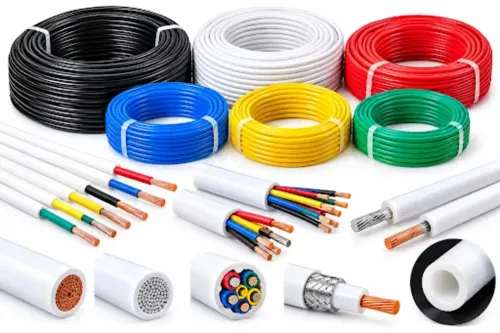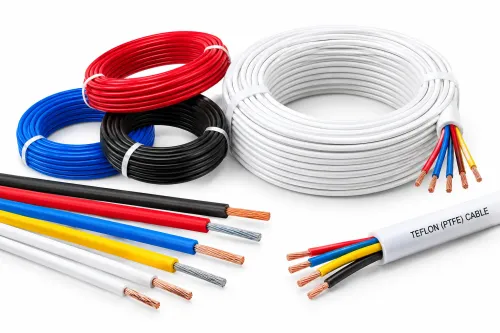
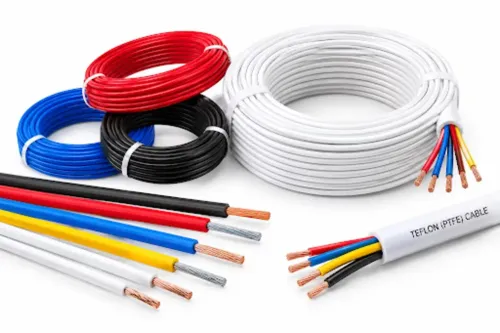
Heat and Chemical Resistant Wiring Solutions from Teflon Cables Manufacturers
Choosing a heat- and chemical-resistant cable requires more than selecting insulation labelled “Teflon.” You will be able to compare fluoropolymer constructions, calculate the constraints that control safe operation, and specify a cable that survives installation, termination and service conditions.
Key takeaways
- Ask for the resin type, wire construction, part number and approval.
- Choose PTFE, FEP or PFA based on temperature and chemical exposure.
- Check conductor size, current, voltage and insulation limits together.
- Protect fluoropolymer insulation during routing, stripping and termination.
Specify the wire construction, not just “Teflon”
Request a complete Teflon wire specification before comparing prices or temperature claims. “Teflon” is a trademark, not a construction: ask whether the resin is PTFE, FEP, PFA, ETFE or another fluoropolymer, then record the exact part number and approval.
1. Specify the conductor material, such as bare copper, nickel-plated copper or tinned copper, plus cross-sectional area or AWG, conductor diameter and stranding class. Request strand count and the required flex-life or vibration test; a fine-stranded PTFE insulated wire bends better but needs more…