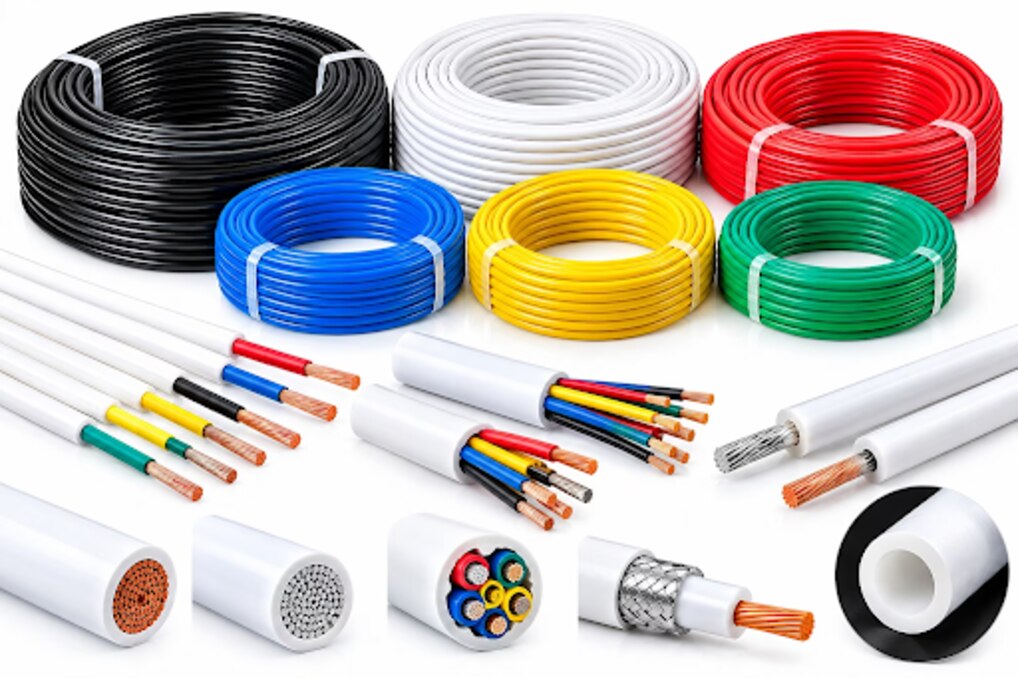
Furnaces, chemical-processing equipment, aircraft systems and laboratory instruments do not all need the same PTFE cable construction, even when they share a high-temperature requirement. By the end, you will be able to match the cable to its thermal, mechanical and electrical duty, then assess a manufacturer’s drawings, tests, approvals and traceability before placing an order.
Key takeaways
- Use PTFE where heat, chemicals, friction, or electrical stability rule out cheaper insulation.
- Match conductor, insulation, shielding, and flexibility to the installation environment.
- Specify temperature, voltage, movement, chemicals, dimensions, and tests before requesting quotes.
- Ask manufacturers for standards, test reports, traceability records, and manufacturing-control details.
Where PTFE Cables Earn Their Place in Industrial Equipment
Choose PTFE cable when heat, chemicals, low friction, or electrical stability would defeat cheaper insulation. PTFE cable applications include furnace wiring, industrial ovens, heaters and motor leads, instrumentation, chemical-processing equipment, aerospace systems, and laboratory equipment.
The polymer alone is not the specification: continuous service around 200–260 °C depends on conductor, insulation wall, voltage, construction, and approval.
| Application | Features to match | Consequence of mismatch |
|---|---|---|
| Furnace wiring | Exact UL AWM Style, conductor size, temperature and voltage rating; flexible strands for installation | A generic “UL PTFE wire” may fail equipment approval |
| Industrial ovens, heaters and motor leads | High-temperature conductor, suitable ampacity, insulation thickness and bend radius | Bundling or conductor heating can exceed the cable rating |
| Instrumentation and control panels | Controlled geometry, finished-cable impedance and attenuation; braid, foil or served shield with specified coverage and termination | PTFE’s dielectric properties alone do not guarantee signal integrity |
| Chemical-processing equipment | Verified compatibility with the actual oils, solvents, vapours and temperature | Molten alkali metals and hot fluorine can attack PTFE |
| Aerospace and laboratory equipment | Low mass, low friction, flex life, vacuum suitability and documented traceability | Abrasion or outgassing can undermine a delicate assembly |
| High-voltage equipment | Rated insulation thickness, void control, hipot, spark and partial-discharge tests | PTFE’s temperature rating does not prove high-voltage suitability |
Use solid PTFE insulation for demanding electrical protection; specify PTFE coating or fiberglass braid when surface abrasion, flexibility, or installation clearance drives the design. Finish the comparison with the complete construction, not the polymer name.
Match the Cable Construction to Heat, Movement and Chemical Exposure
Use the hottest conductor temperature, not the room temperature, to select PTFE cable. The continuous operating temperature must cover ambient heat plus conductor heating from load current; a cable that survives 200 °C air can still exceed its rating inside a tightly packed bundle.
Short-duration temperature exposure does not replace a continuous rating. A furnace lead may tolerate a brief excursion above its normal limit, but repeated excursions age insulation and terminations; confirm the permitted duration, recovery interval and test basis.
Check these points before approving the construction:
- For bundled cables, calculate heat rise and derate for restricted airflow. Add the temperature of nearby heaters, furnaces or motor housings.
- For moving equipment, request flex-cycle data, minimum bend radius, strand construction and flex lay. PTFE’s chemical and heat resistance does not guarantee resistance to cut-through or repeated flexing.
- For chemical service, identify the exact reagent, concentration, temperature and contact time. Verify the jacket, filler, shield binder and termination materials, not PTFE alone.
- Distinguish PTFE insulation versus PTFE coating. A solid PTFE insulation wall provides the specified dielectric barrier; a thin coating may suit a protected winding or component but fail under abrasion, compression or voltage stress.
- Confirm the finished cable’s temperature and voltage style, conductor size, insulation thickness and approval. “PTFE wire” alone proves none of these.
The complete assembly is limited by its weakest part. Crimp insulation, connector bodies, adhesives, heat-shrink tubing and sensor junctions can have lower ratings than the PTFE cable. For thermocouples and RTDs, also match alloy, calibration type, polarity and junction construction.
Compare PTFE with Other Insulation and Conductor Options
Choose PTFE for continuous service near 200–260 °C, low dielectric loss, chemical resistance, or low-friction insulation. Confirm the exact construction and approval: a “PTFE” label alone does not establish its temperature or voltage rating.
| Option | Compared with PTFE | Choose it when |
|---|---|---|
| PVC | Lower cost and easier termination, but lower heat and chemical resistance | Equipment stays within PVC’s temperature rating and abrasion risk is modest |
| XLPE | Stronger insulation with good electrical performance, but less heat capability than PTFE | You need economical power wiring below PTFE’s operating range; this is the practical PTFE versus XLPE decision |
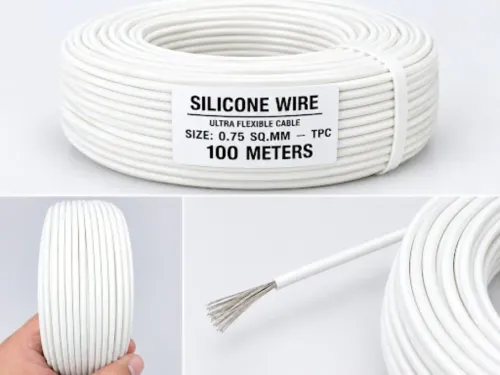
| Silicone rubber cable | Softer and more flexible, but easier to cut, tear and abrade | Repeated flexing matters more than abrasion or solvent exposure |
| Fiberglass-braided cable construction | Braid adds heat and abrasion protection but is not a sealed, chemical-resistant jacket | Use it over insulated conductors near radiant heat; do not treat the braid alone as insulation |
| FEP or PFA | Melt-processable fluoropolymers offer easier extrusion; FEP has a lower temperature ceiling, while PFA approaches PTFE’s heat range | Select FEP for lower-temperature flexibility and PFA for tougher processing or flexing; select PTFE for high-temperature, low-friction service |
Conductor details change the result as much as insulation. Bare copper solders easily but oxidises; tin-plated copper improves solderability and corrosion resistance, silver-plated copper supports hotter service, and nickel plating withstands higher temperatures while reducing conductivity. Specify plating thickness, conductor standard and strand count.
Fine stranding improves flex life; fewer, larger strands improve dimensional stability and termination strength. For thermocouples and RTDs, also specify alloy, calibration type, polarity and junction construction.
Specify the Finished Cable Before You Compare Manufacturers
A request for “PTFE cable, 600 V, 200 °C” will not produce comparable quotes. State the finished construction, because the same PTFE label can hide different diameters, flexibility, electrical performance and approvals.
| Specification item | Detail to state | Why it matters |
|---|---|---|
| Electrical rating | Voltage rating, continuous temperature, short-duration temperature, frequency and current or conductor-temperature limit | PTFE polymer alone does not establish high-voltage suitability or allowable heating |
| Conductor | Material, conductor size, solid or stranded form, strand count and strand construction | Two wires with the same gauge can differ in flexibility, resistance and termination behaviour |
| Insulation | PTFE compound or grade, nominal insulation wall thickness, minimum wall thickness and permitted tolerance | Wall variation changes dielectric strength, outside diameter and heat transfer |
| Finished dimensions | Finished outside diameter, diameter tolerance, cable length and minimum bend radius | These dimensions control glands, backshells, harness fill and installation space |
| Construction | Number of cores, core identification, twist or lay, shield, drain wire, jacket, braid and fillers | Geometry affects impedance, shielding, abrasion resistance and bend life |
| Performance and approval | Impedance, attenuation, capacitance, dielectric or spark test, hipot and partial-discharge requirement; applicable UL AWM Style number | A material datasheet cannot replace finished-cable data, and UL recognition is construction-specific |
For a signal cable, specify the test frequency and impedance tolerance. For equipment wiring, name the exact UL AWM Style rather than writing “UL PTFE wire.” Request the controlled drawing, revision level, lot traceability and change-notification procedure with the quotation. Inspect the actual finished diameter and insulation wall on production samples before approving the supplier.
Verify Standards, Tests and Manufacturing Control
Do not approve a PTFE cable from the word “PTFE” alone. Request the complete UL AWM Style number and the full MIL-DTL-16878 slash designation; each identifies a defined construction, conductor, insulation thickness, temperature rating, voltage rating and permitted use.
Confirm that the IEC, UL and CSA approvals apply to the exact finished cable, not a similar product family.
Request these records before releasing the cable for production:
- The datasheet naming conductor material, plating, strand construction, cross-sectional area, insulation wall, outside diameter, voltage rating and continuous temperature rating.
- Current approval certificates or listing files, plus the standard and revision used for each test.
- Routine test results for conductor resistance, insulation resistance, spark or hipot testing, and dimensional checks.
- Type-test evidence for dielectric strength, flame performance, heat ageing and chemical exposure when those risks exist in your assembly.
- Flex-cycle data and minimum bend radius for moving wiring; a high temperature rating does not prove repeated-flex performance.
- Lot or batch traceability linking the cable, raw materials, test results and production date.
Ask how the manufacturer controls extrusion temperature, wall thickness, concentricity, conductor centring and spark-test calibration. Rewari Cable Industries should be evaluated against the same document set, including a production sample measured against the approved drawing.
For high-voltage assemblies, request partial-discharge or corona limits that match your voltage, insulation geometry, shielding and termination. A passing hipot test alone can miss discharge that will damage insulation over time.
Related products
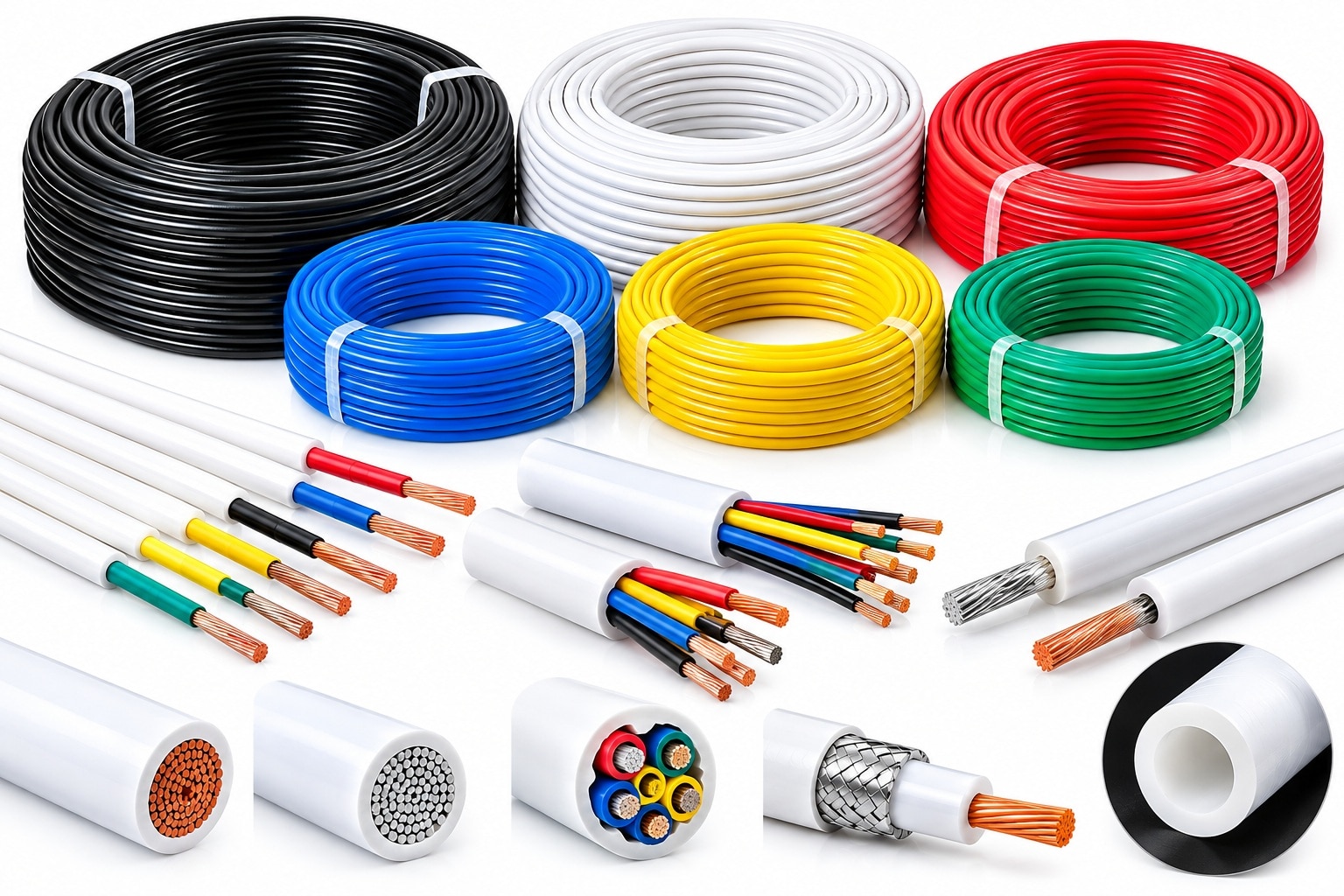 | PTFE Teflon Cable Rewari Cable Industries offers PTFE Teflon Cables designed for electrical wiring and industrial applications where high-temperature performance,... View product → |
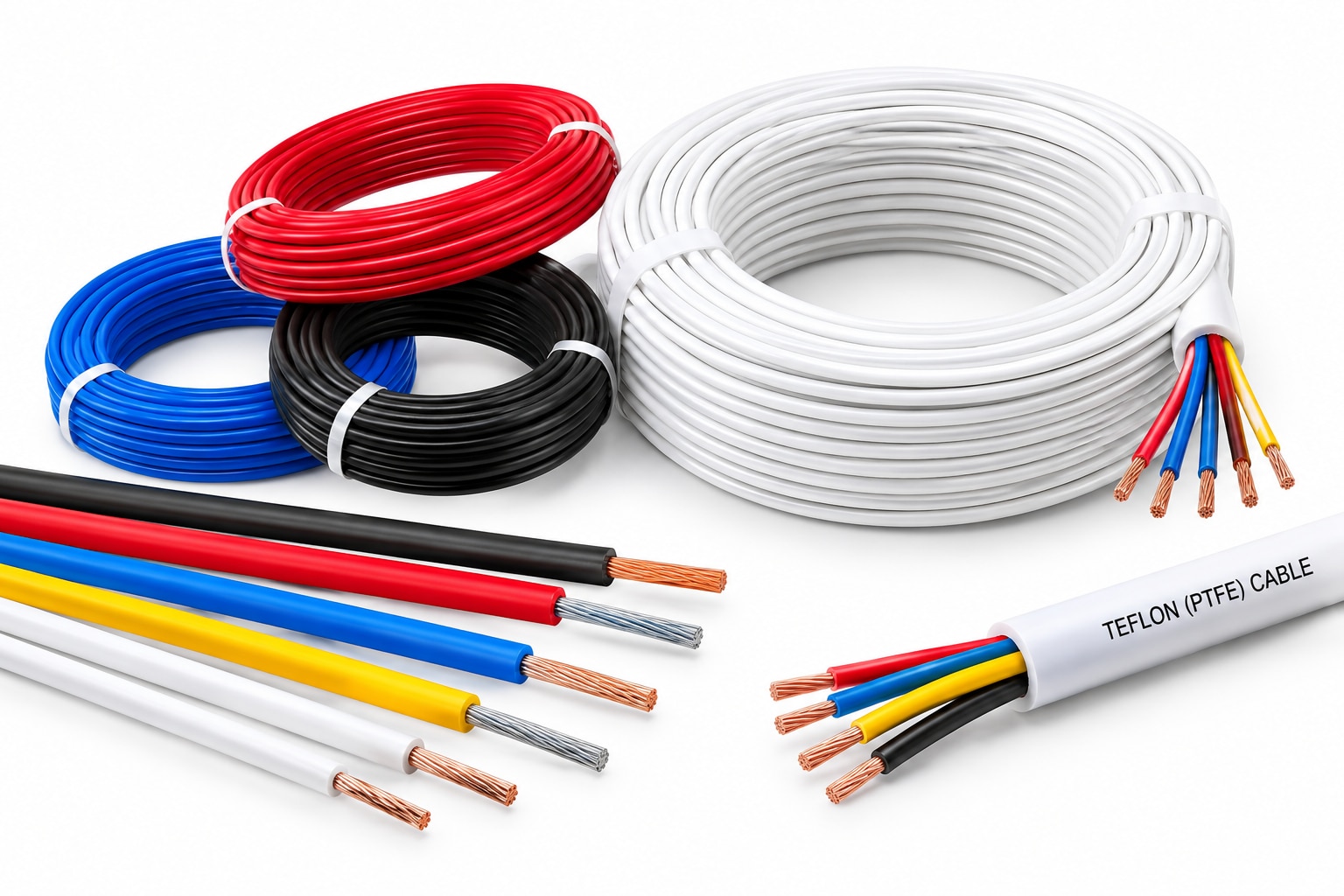 | Teflon Cables Rewari Cable Industries manufactures and supplies high-performance Teflon (PTFE) Cables designed for electrical and industrial applications where... View product → |
Frequently asked questions
Where are PTFE cables used in industrial equipment?
PTFE cables suit furnace wiring, industrial ovens, heaters, motor leads, instrumentation, chemical-processing equipment, aerospace systems, and laboratory equipment.
How do you match PTFE cable construction to an application?
Define the cable’s heat exposure, movement, chemical contact, electrical load, conductor material, shielding, flexibility, and installation space before selecting construction.
How does PTFE compare with other cable insulation options?
PTFE is worth comparing when heat resistance, chemical resistance, low friction, or stable electrical performance matters more than the lower cost of alternative insulation.
What should you verify with a PTFE cable manufacturer?
Request the finished cable specification, applicable standards, test reports, conductor and insulation details, batch traceability, and evidence of controlled manufacturing.
Related products
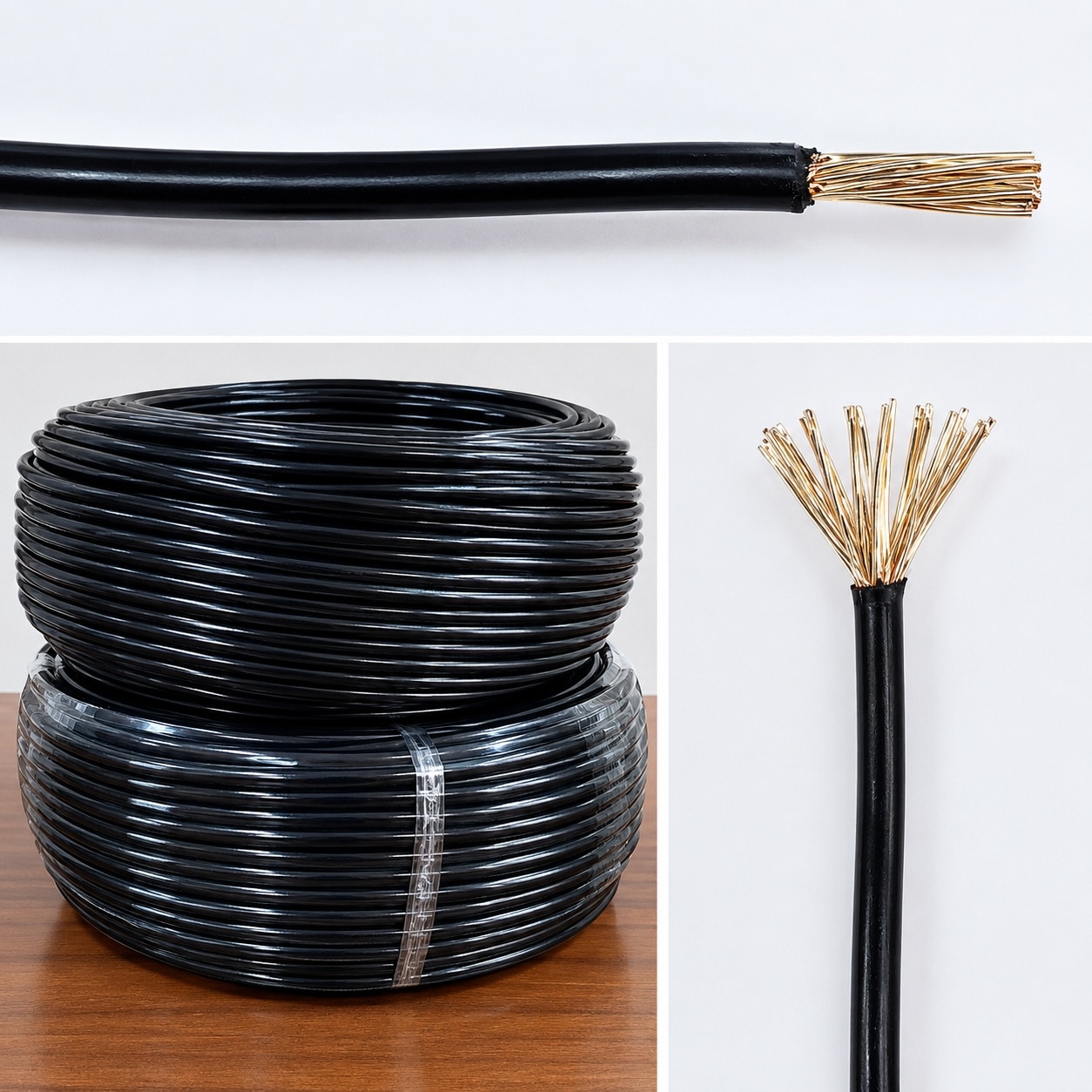 | Silicon Teflon Coated Wire Rewari Cable Industries Teflon Coated Wire, commonly known as PTFE Wire, is a high-performance electrical wire designed for applications that demand... View product → |
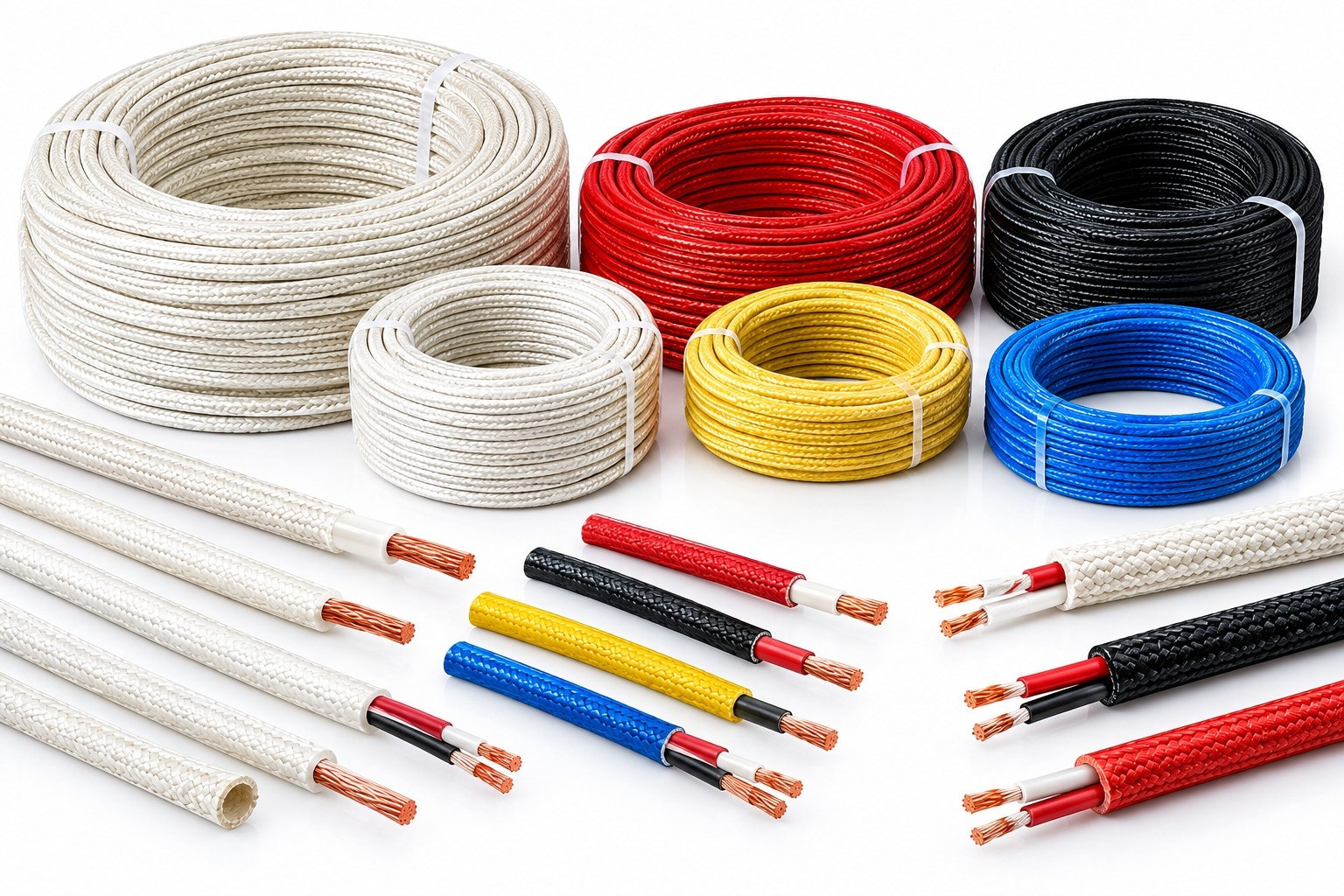 | Fiberglass Cable Rewari Cable Industries Fiberglass Cables and Fiberglass Insulated Wires are designed for electrical and industrial applications requiring... View product → |
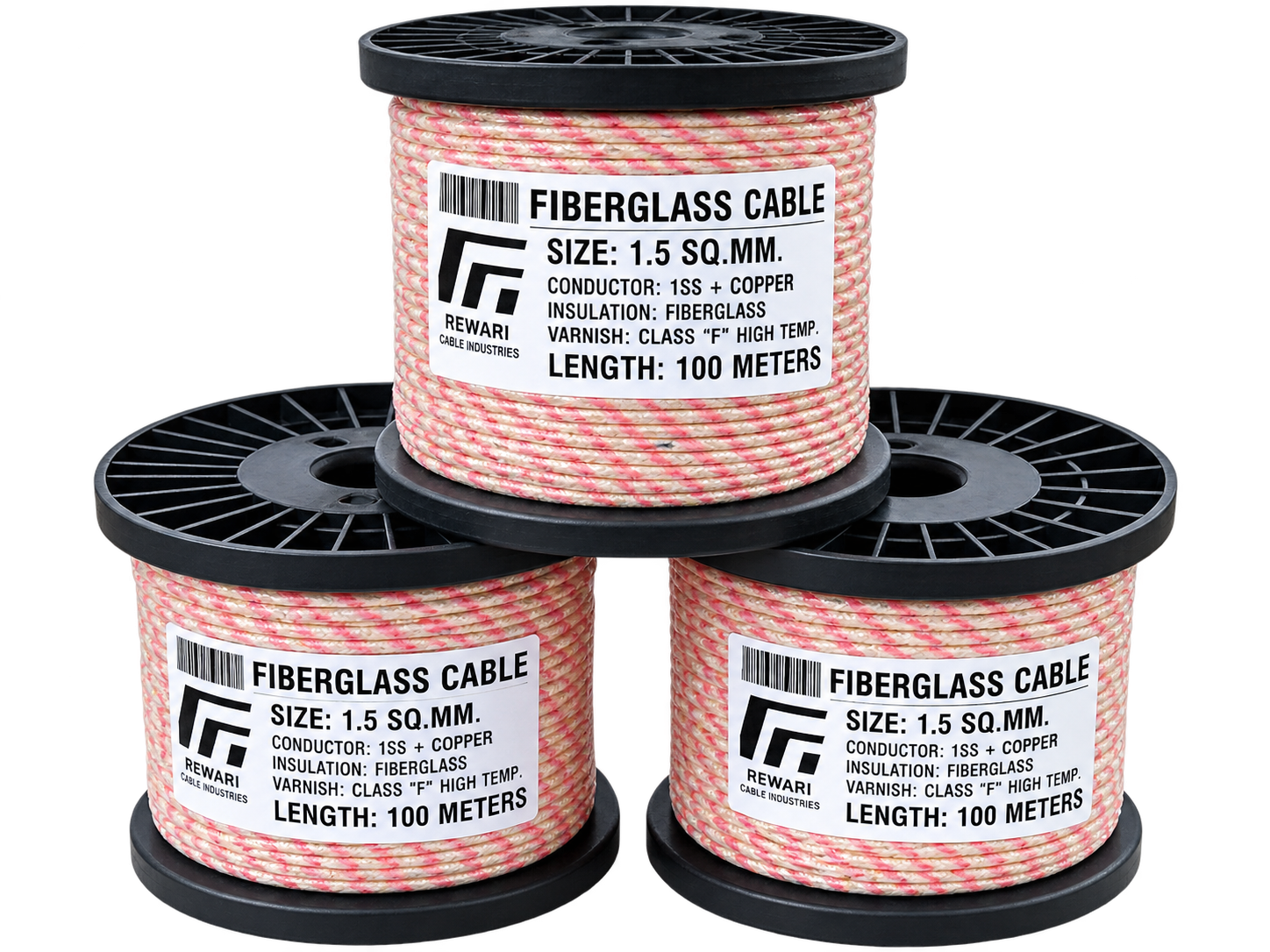 | Fibreglass Cable Rewari Cable Industries manufactures high-quality Fibreglass Cables designed for electrical applications requiring excellent heat resistance,... View product → |
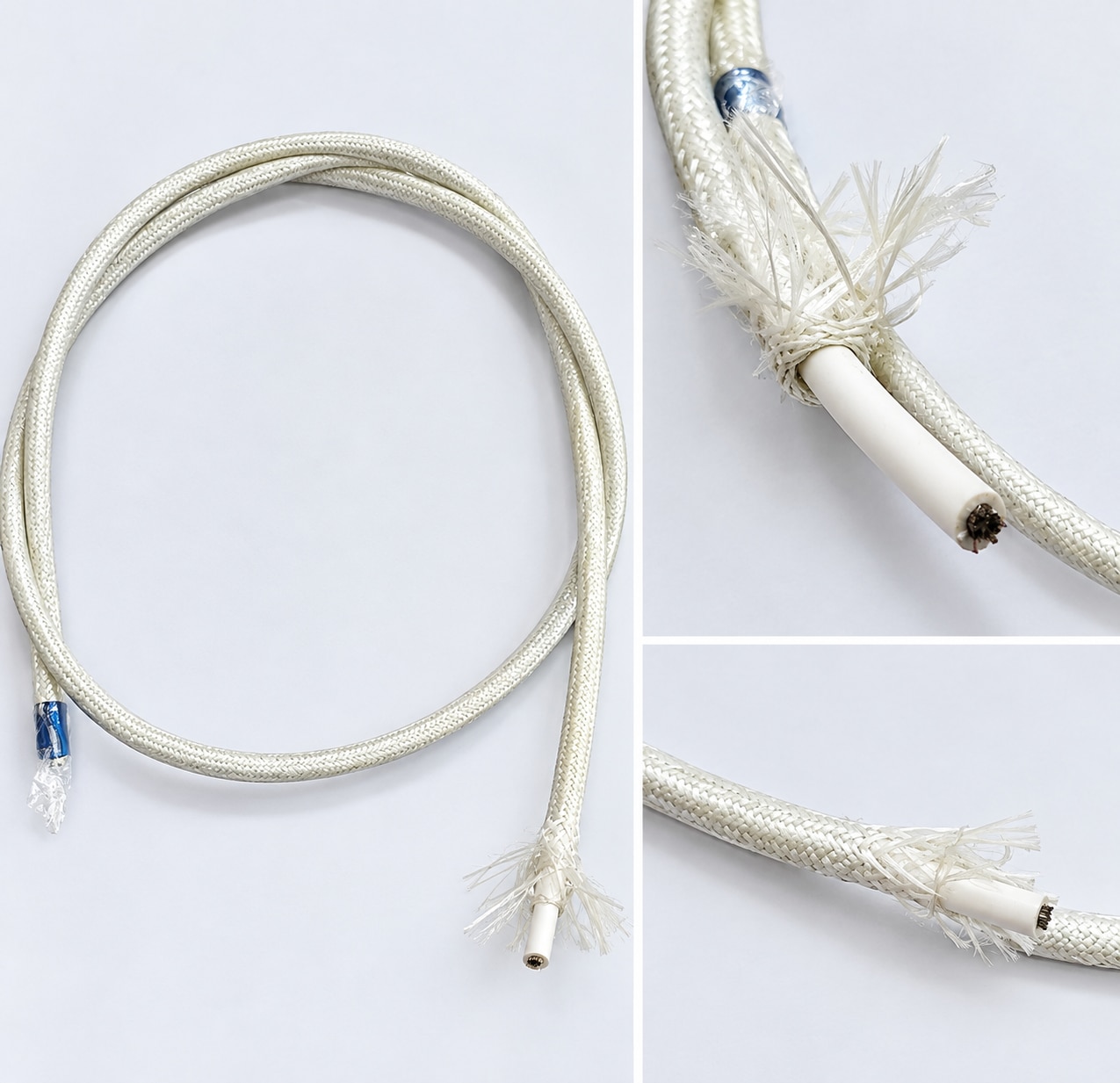 | Silicone Wire Rewari Cable Industries Silicone FG Cables are high-temperature, flexible electrical cables designed with silicone rubber insulation and fiberglass... View product → |