A thermocouple cable can survive abrasion and crushing yet still deliver the wrong temperature because of moisture, incorrect alloy, poor grounding, or a termination rated below the process temperature. By the end, you will be able to define the thermocouple, armour, environmental, accuracy, installation, and verification requirements before comparing manufacturers or requesting a quotation.
Key takeaways
- Identify abrasion, chemicals, heat, moisture, and crushing risks before choosing armour.
- Specify thermocouple type, accuracy class, and extension cable construction together.
- Match sheath and armour materials to temperature limits and contaminants.
- Compare manufacturers using termination details, installation checks, and test records.
Define the hazard before specifying thermocouple armour
A cable can survive abrasion and still report the wrong temperature. Chemical attack can alter thermocouple accuracy while leaving the cable mechanically intact, so cable protection in harsh industrial environments must begin with the actual failure hazard—not with a request for “armoured” cable.
1. Identify every exposure at the cable route: abrasion, crushing, impact, vibration, bending, moisture, pressure, molten material, and chemicals. Name the atmosphere as oxidizing, reducing, carburizing, sulfur-bearing, or halide-bearing; “stainless steel” is not enough to select a sheath alloy.
2. Match the barrier to the hazard. A metal sheath resists abrasion and crush, but it is not automatically a hermetic moisture barrier, pressure boundary, or electromagnetic shield. Moisture can enter through a gland, joint, or damaged sheath, while EMI protection depends on construction and grounding.
A stainless-steel overbraid adds mechanical protection and flexibility, but it does not replace a sealed sheath where liquids or gases can reach the conductors.
3. Rate the complete assembly, not just the sensing junction. Sheath, insulation, extension cable, transition seal, connector, gland, and bend protection must all withstand the route’s temperature and environment. The weakest component sets the usable limit.
Before approving thermocouple armoured cables, require dimensional tolerances, minimum bend radius, crush and impact data, sheath alloy, ingress objective, and termination details. A gland chosen only for outside diameter can leak; match it to the armour construction, sheath, temperature, tolerances, and required seal. Ask manufacturers to identify which barrier protects against each named hazard.
Specify thermocouple type, accuracy, and extension construction
A Type K thermocouple cable or Type J thermocouple cable is not fully specified until you state its tolerance class and operating range. Cite IEC 60584-1 or ASTM E230/E230M, then record the required calibration tolerance at the temperatures that matter; “Type K” alone says nothing about whether Class 1 or Class 2 accuracy is acceptable.
Your electrical specification should state:
- Thermocouple type, conductor materials, polarity, and insulation colour code
- IEC 60584-1 tolerance class, reference junction conditions, and temperature range
- Extension or compensating construction, with the permitted ambient range
- Cable resistance per metre, conductor size, maximum loop length, and insulation resistance
- Connector and terminal materials, pin polarity, and compatibility with the input instrument
- Required calibration certificate, test points, and acceptance error for the complete sensor circuit
| Construction | Electrical meaning | Specify |
|---|---|---|
| Thermocouple-grade | Conductors retain the thermoelectric composition of the sensor pair across the stated range | Material, tolerance class, and maximum service temperature |
| Extension-grade | Matched thermocouple alloys continue the circuit to the instrument | IEC 60584-3 compliance and its usable temperature range |
| Compensating-grade | Different alloys reproduce the thermoelectric output only within a limited range | Alloy designation, polarity, ambient limits, and transition temperature |
Do not substitute copper hookup wire. It creates another thermoelectric junction and changes the measured voltage. Extension cable also does not remove cold-junction compensation; it moves the reference junction to the instrument terminals, where the transmitter or indicator must measure and correct for terminal temperature.
Match materials and ratings to temperature and contamination
A cable’s maximum temperature is set by its weakest component, not its thermocouple conductor. Check the thermocouple sheath material, insulation, transition seal, extension wire, connector, gland, and bend protection against the same thermocouple temperature range.
For a mineral insulated thermocouple cable, compacted magnesium oxide insulation tolerates high heat but absorbs moisture. Seal both ends during storage and installation; water ingress lowers insulation resistance and increases leakage or shunting errors. Replace a cable with damaged end seals.
Match the sheath to the actual contamination, not simply to a label such as “stainless steel.” Record whether the process is:
- Oxidizing or reducing
- Carburizing or sulfur-bearing
- Halide-bearing
- Molten material exposure
Chemical attack can shift the reading while leaving the cable mechanically intact. Confirm the sheath alloy’s compatibility with the process chemistry and temperature.
A gland selected only by outside diameter can leak or crush the armour. Match the compression fitting to the sheath material, armour construction, dimensional tolerance, ingress requirement, and installation temperature; verify the sensing-junction seal as carefully as the armour length.
Choose the junction arrangement against electrical noise as well as response time.
| Option | Benefit | Risk |
|---|---|---|
| Grounded junction | Faster heat transfer | Connects the circuit to the sheath, enabling ground loops and interference |
| Ungrounded junction | Electrical isolation | Slower response and greater thermal resistance |
Continuity testing finds opens and gross insulation failures, not wrong alloy, reversed polarity, drift, thermal shunting, or contamination. Add polarity checks and temperature comparison against a traceable reference.
Balance flexible protection against rigid armour and response time
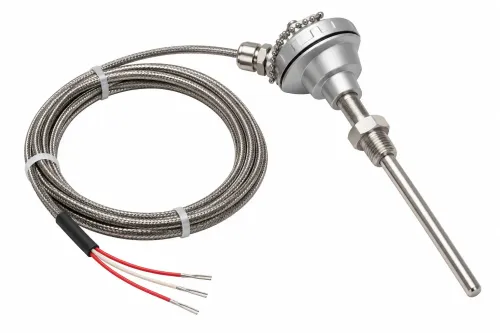
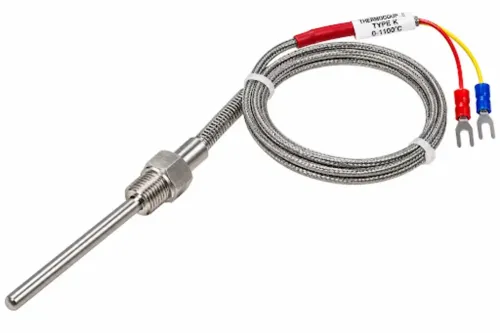
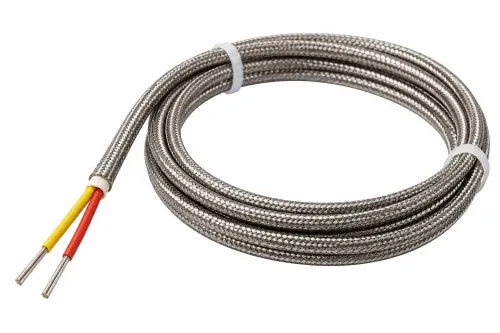
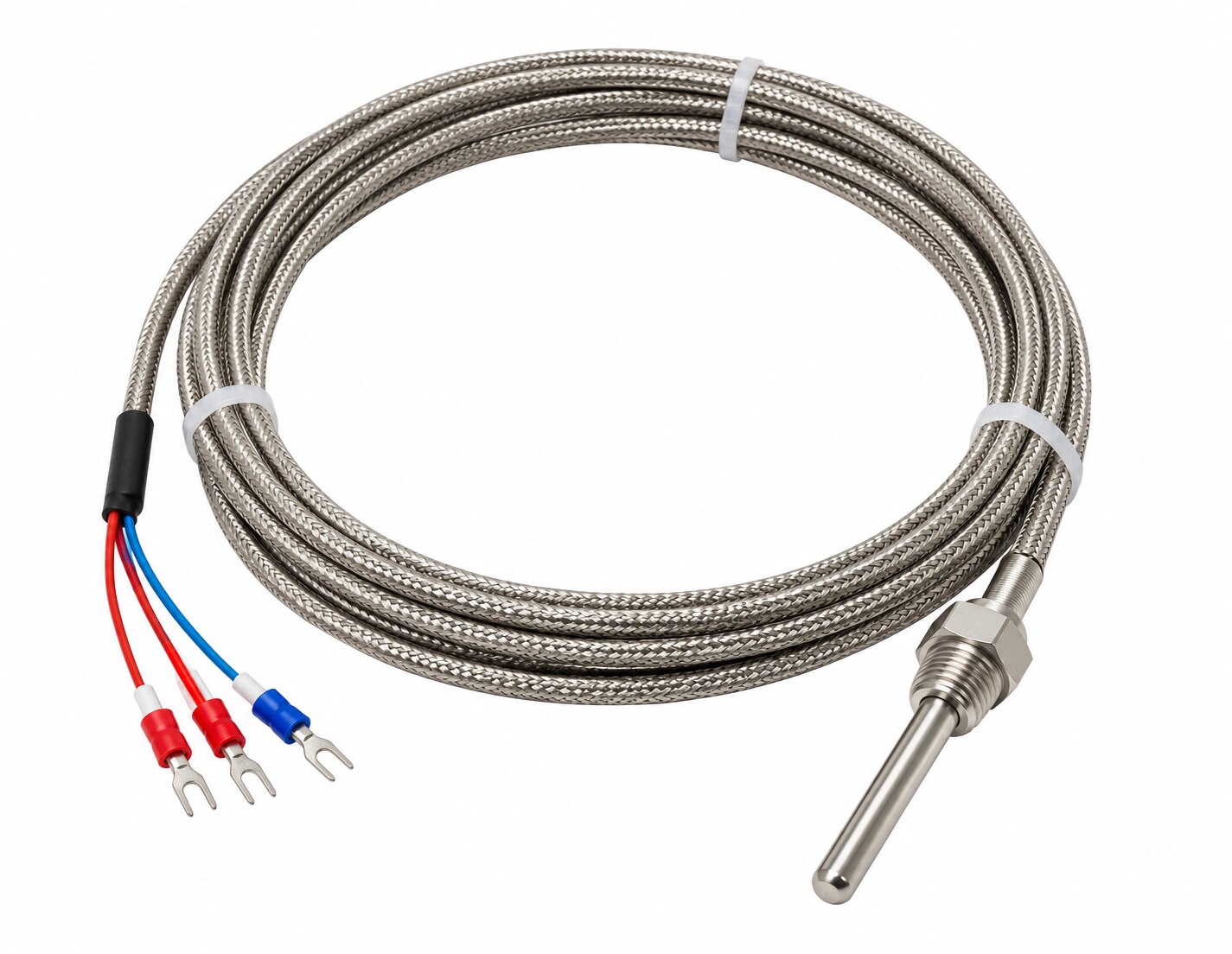
A flexible braided thermocouple cable suits vibration, moderate abrasion, and routes that move during operation. It follows machinery without imposing the stiffness of rigid metal armour, but the braid is not a crush barrier or hermetic seal. Protect the probe-to-cable transition with strain relief; repeated flexing there causes early failure.
| Option | What it provides | When to choose it |
|---|---|---|
| Flexible braided thermocouple cable | Bendable abrasion protection with low added mass | Moving equipment, vibration, and accessible routes without crush or impact risk |
| Metal-sheathed cable | Strong abrasion, heat, and crush resistance; compacted MgO insulation | Fixed hot zones, sharp debris, or severe mechanical exposure |
| Conduit | Replaceable mechanical shielding around the cable | Long fixed runs, retrofit routes, or locations needing later cable replacement |
| Cable track | Guided repeated movement with controlled bend | Robot arms, machine slides, and reciprocating equipment |
Use the cable’s specified static minimum bend radius for fixed routing and its dynamic minimum bend radius inside a cable track. The outside diameter alone is not enough. Exceeding the dynamic limit concentrates stress at the transition and can fracture conductors or the sheath.
Protection also changes thermocouple response time. A larger sheath, extra armour, grounded junction, or thermowell adds thermal lag; compare response data only when immersion depth, flow, mounting, and test criterion match. Seal mineral-insulated cable ends because hygroscopic MgO absorbs moisture, lowering insulation resistance and increasing leakage or shunting errors.
Use installation, termination, and testing checks to compare manufacturers
Ask each thermocouple cable manufacturer for a construction drawing, datasheet, and certificate covering the complete assembly—not only the conductor. The document must name the thermocouple type, extension or compensating grade, IEC 60584-3 compliance, sheath, insulation, armour, transition seal, connector, gland, temperature limits, and minimum bend radius.
Before installation, require these checks:
- Confirm polarity, colour identification, conductor alloy, and the permitted ambient range for every extension or compensating section. Copper hookup wire is not an acceptable substitute.
- Match the armoured cable gland to the cable’s actual diameter, sheath, armour construction, temperature, and ingress requirement. A diameter-only selection can leak or crush the cable.
- Require a termination drawing showing the sensing-junction seal and strain relief. A sound armour with a failed junction seal still admits moisture.
- Record continuity and insulation resistance, then perform thermocouple calibration or temperature comparison against a traceable reference. Continuity cannot reveal wrong alloy, polarity reversal, drift, or thermal shunting.
- Confirm cold-junction compensation at the instrument. Extension cable relocates the reference junction; it does not remove the instrument’s need to measure and compensate for it.
For Rewari Cable Industries or any competing supplier, request signed test records tied to the cable batch and finished assembly.
| Evidence | Accept | Reject |
|---|---|---|
| Construction certificate | Complete ratings and IEC 60584-3 details | Conductor-only data |
| Termination proof | Gland and seal match the assembly | Generic gland size |
| Test report | Polarity, insulation, continuity, and reference comparison | Continuity alone |
| Temperature rating | Lowest-rated component is identified | Sensor rating only |
Related products
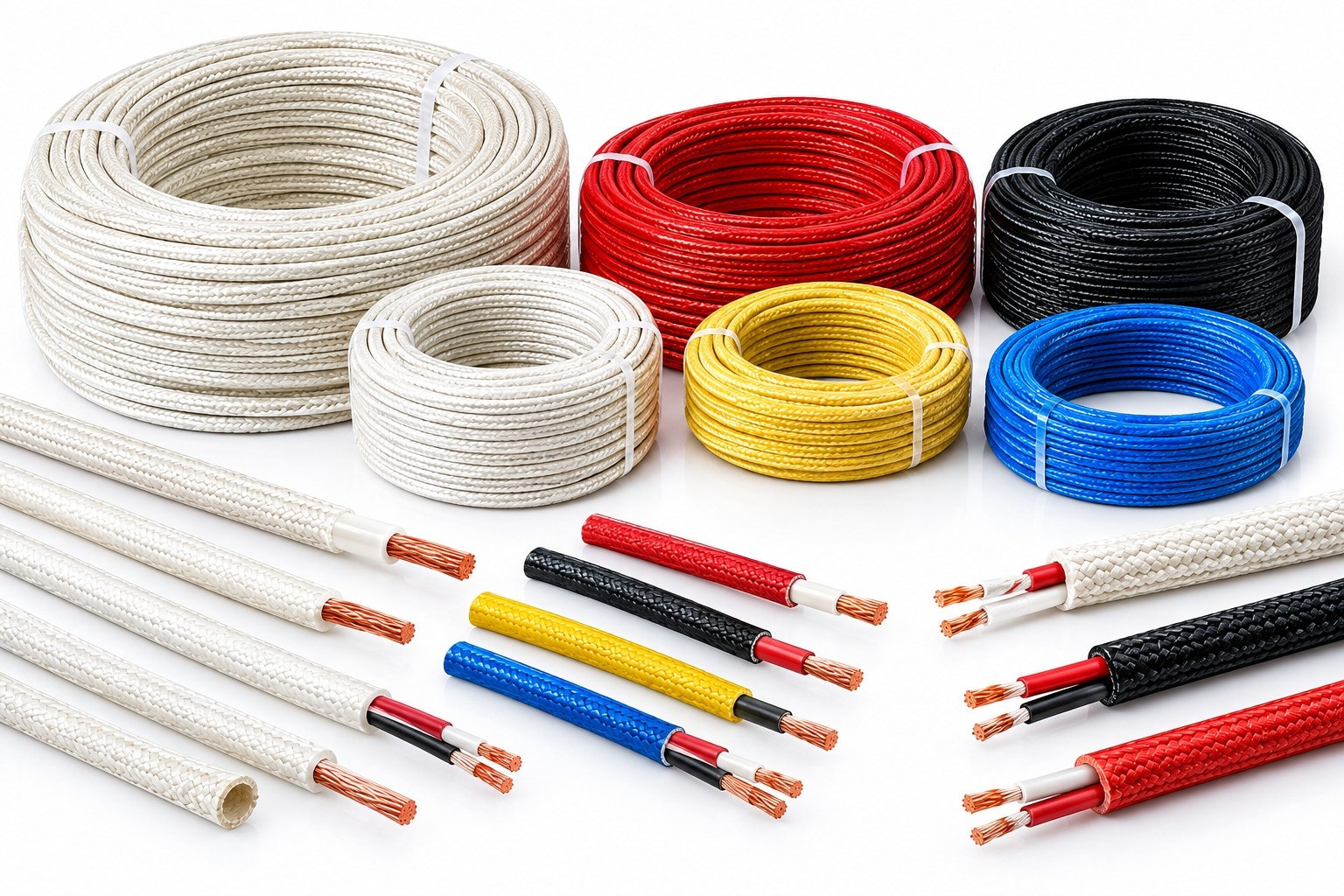 | Fiberglass Cable Rewari Cable Industries Fiberglass Cables and Fiberglass Insulated Wires are designed for electrical and industrial applications requiring... View product → |
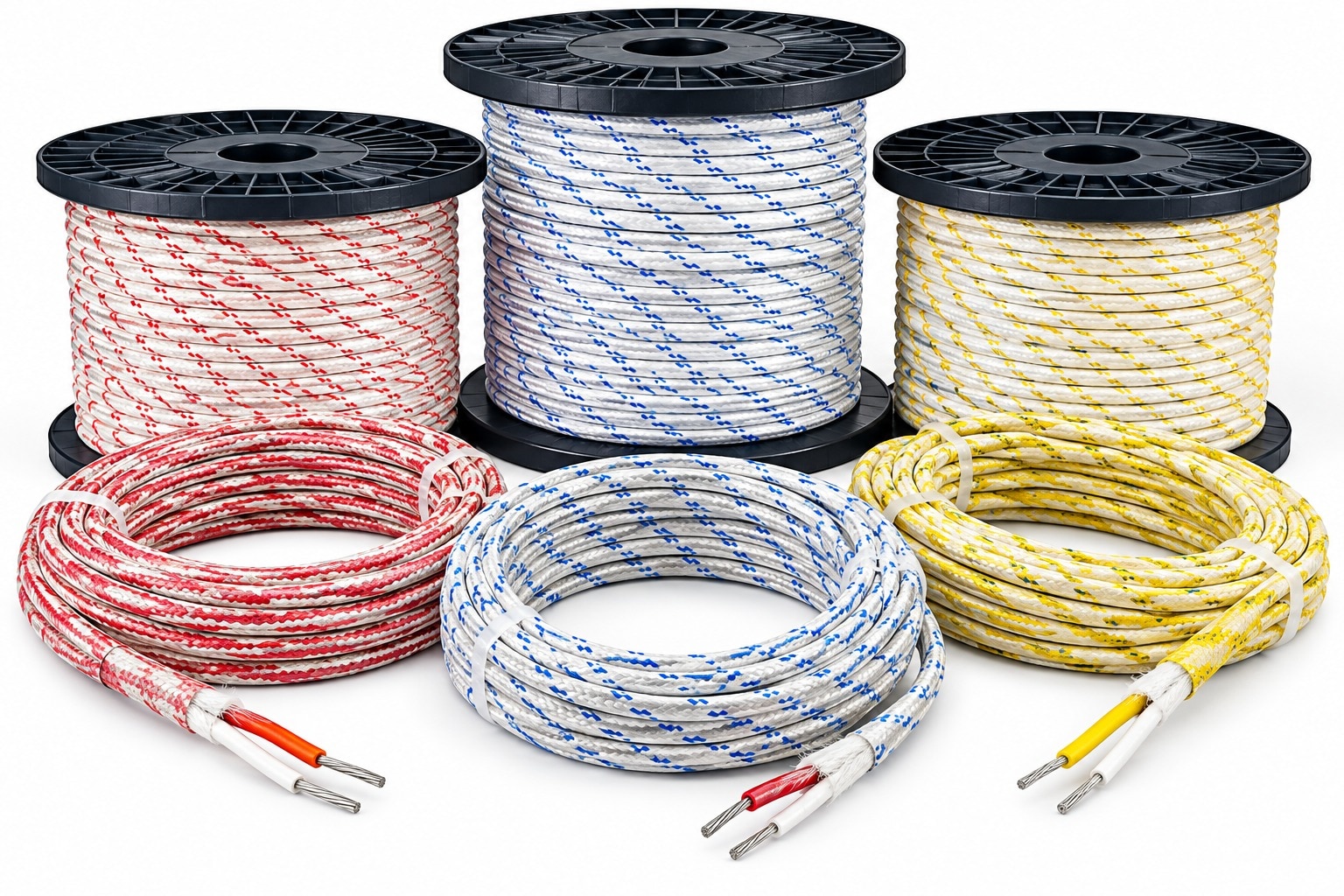 | Thermocouple Fiber Cable Rewari Thermocouple Fiber Cable Rewari Rewari Cable Industries offers high-quality Thermocouple Fiber Cables designed for temperature measurement and signal transmission in demanding... View product → |
Frequently asked questions
What hazard should you identify before specifying thermocouple armour?
Identify the actual failure risk, including abrasion, crushing, chemical attack, heat, moisture, and movement, because armour that resists impact may not prevent measurement error from chemical damage.
What thermocouple details must you specify?
State the thermocouple type, accuracy requirement, extension or compensating cable construction, conductor materials, insulation, and termination arrangement.
How do temperature and contamination affect cable material selection?
Choose sheath, insulation, and armour materials against the highest operating temperature and the specific contaminants present, such as oils, acids, solvents, dust, or moisture.
When is flexible protection preferable to rigid armour?
Use flexible protection where repeated movement or tight routing could fatigue rigid armour; choose rigid armour where crushing, impact, or fixed mechanical protection is the dominant hazard.
How can you compare thermocouple cable manufacturers?
Review installation guidance, termination methods, continuity and polarity tests, insulation resistance results, calibration or accuracy records, and traceable product documentation.
Related product
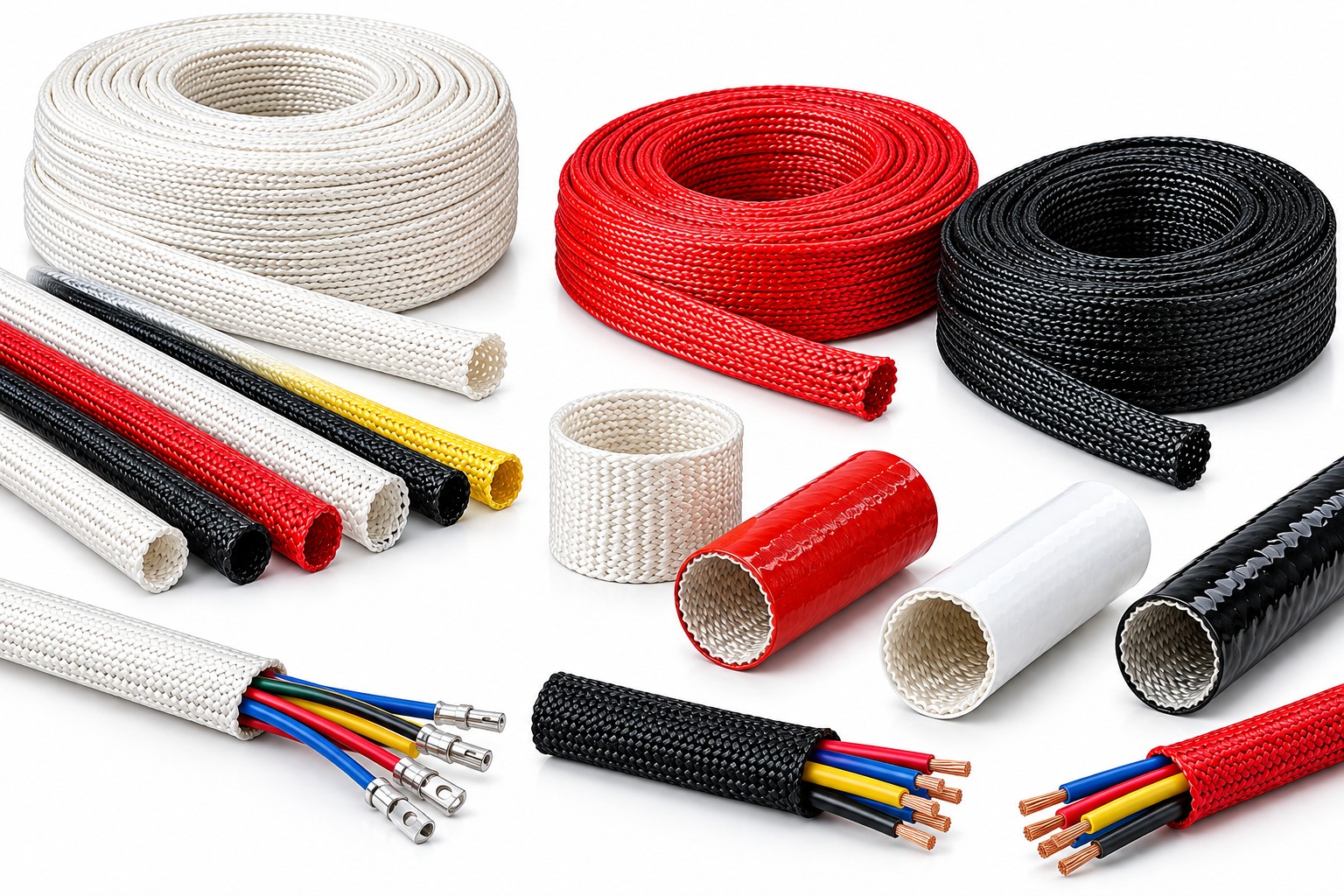 | Cable Sleeve Rewari Cable Industries offers Cable Sleeves designed to provide reliable protection and insulation for wires, cables, electrical connections, and... View product → |