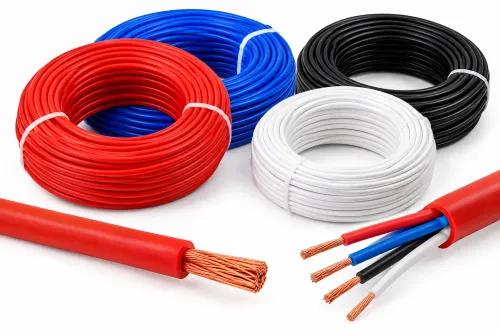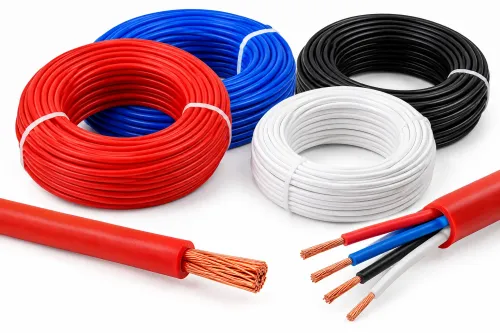
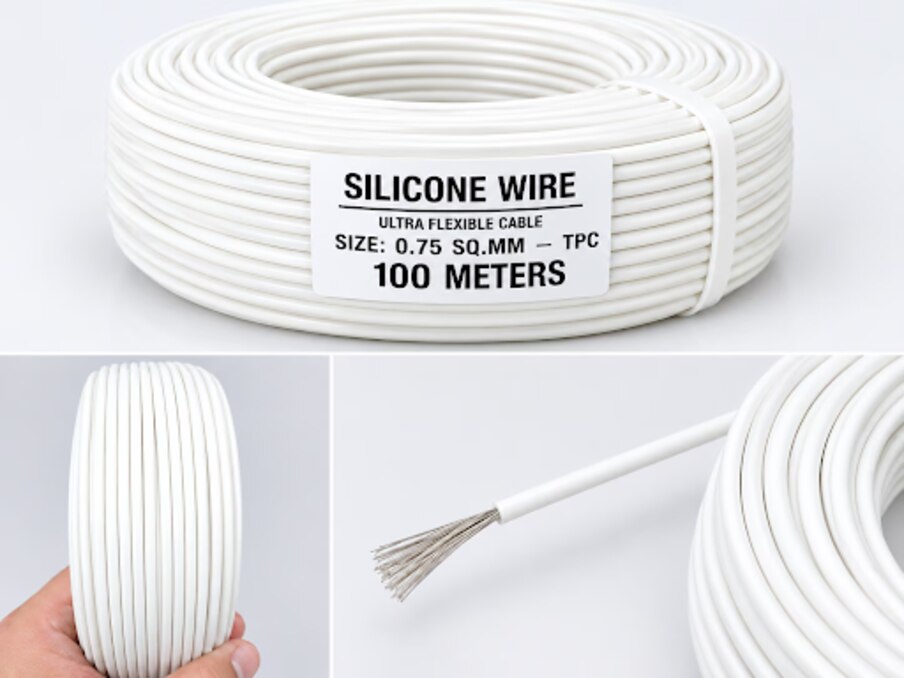
A cable that survives heat is not automatically suitable for movement, high voltage, chemicals, or repeated flexing. By separating insulation performance from conductor ampacity, mechanical durability, and installation conditions, you can choose a cable construction that will remain safe and functional in its actual service environment.
Key takeaways
- Separate insulation temperature from current, voltage and bend ratings.
- Define the cable’s temperature, load current, voltage and movement before selecting it.
- Use fiberglass braid where heat and abrasion demand extra mechanical protection.
- Reject silicone-only construction when oil, sharp edges or severe flexing dominate.
Why high-temperature flexibility requires a specialised cable construction
Flexible high temperature wiring is a specialty because heat resistance and repeated movement impose different demands on the same cable. Silicone insulation stays pliable across a wide temperature range, but its compound rating does not determine voltage rating, ampacity, abrasion life, or bend performance.
A thin lead using the same silicone as a thicker one can carry a lower voltage. Silicone cable manufacturers therefore select conductor stranding, insulation thickness, shielding or braid, and termination as one construction.
| Option | Main advantage | Main limitation |
|---|---|---|
| Silicone insulation | Flexible at low and high temperatures; good dielectric performance | Tears, abrades, and swells in some oils or solvents |
| PVC cable comparison | Low cost, tough surface, easy processing | Loses flexibility and ages faster at elevated temperature |
| XLPE | Strong dielectric performance and higher heat capability than PVC | Less supple than silicone during repeated flexing |
| PTFE or Teflon | Excellent chemical resistance and low friction | Stiffer, harder to terminate, and costly |
| Fiberglass-braided construction | Adds mechanical and heat protection | Increases diameter and bend radius; braid is not electrical insulation |
The cable must match continuous temperature, brief peak exposure, conductor current, voltage test, movement mode, and chemical contact. A glass braid can fray or absorb contamination, while compression can reduce practical insulation performance. IEC 60245-3 covers heat-resistant silicone-rubber-insulated cables, but it does not automatically satisfy appliance, flame, oil, or North American recognition requirements.
“Silicone cable” alone is not a complete specification.
How to specify temperature, current, voltage and movement
A cable rated 200 °C can still fail if its conductor overheats under load or its terminals sit in a hotter spot. Define the electrical, thermal and mechanical conditions together before comparing constructions.
- Temperature: record ambient temperature, continuous operating temperature, and short-term peak temperature with exposure duration. Specify whether the limit applies to the conductor, insulation, braid, or termination; a brief peak does not equal continuous service. Check hot spots at crimp barrels, heater transitions, terminals, bundles, and poorly ventilated enclosures.
- Electrical load: state ampacity, conductor cross-section, material and stranding, number of cores carrying current, duty cycle, grouping, installation method, and voltage rating. Ampacity changes with ambient heat and bundled conductors, while voltage rating addresses insulation withstand, not current capacity.
- Movement: describe flexing, twisting, vibration, travel distance, cycles per day, and minimum bend radius. A fixed installation, repeated drag-chain travel, and intermittent hand movement need different strand constructions and flex ratings.
- Environment and connection: identify chemicals, oil, moisture, abrasion, flame exposure, shielding, termination method, and required approvals. For a heater, specify the cooler cold-lead section and transition joint, not only the heating wire.
| Option | What to define | Why it matters |
|---|---|---|
| Continuous service | Temperature and load during normal operation | Drives insulation life and ampacity |
| Peak exposure | Maximum temperature and duration | Separates survivable excursions from damage |
| Movement | Bend radius, motion type and cycle count | Prevents conductor fatigue and braid failure |
Where silicone cable works—and where the assembly needs more than silicone
Silicone cable suits oven wiring, furnace wiring, appliance leads and connections beside heating equipment because it stays flexible where PVC can harden or crack.
Its insulation rating, often around −60 to +180 °C or −60 to +200 °C, does not set the cable’s allowable current; conductor size, ambient heat, grouping and installation method still control ampacity.
| Application | Why silicone fits | What the assembly needs |
|---|---|---|
| Moving connection | Remains flexible during repeated movement | Fine-stranded conductors, the specified bend radius, strain relief and protection from clamps or sharp edges |
| Heater lead | Tolerates radiant and conducted heat near terminals | A conductor sized for the load, terminals rated for the temperature, and insulation clearances that prevent scorching |
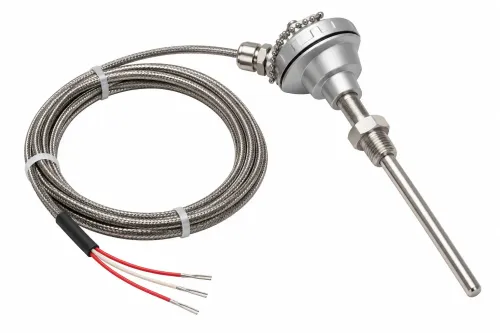
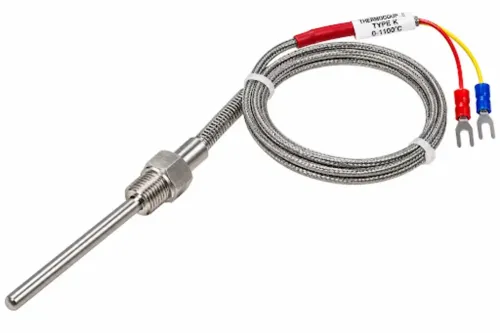
| Thermocouple cable | Flexible insulation protects the measurement pair | Correct thermoelectric alloys, polarity, calibration type and temperature range; copper under silicone is not a thermocouple cable |
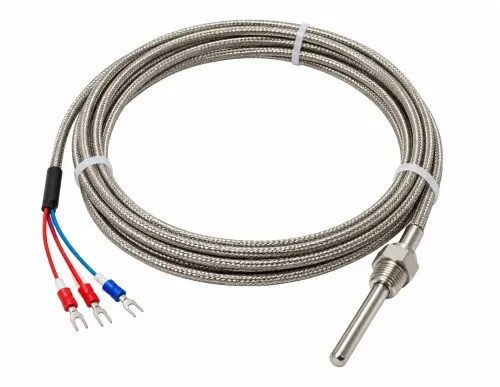
| RTD sensor | Flexible leads simplify routing | Matched conductors and correct three-wire or four-wire termination to control lead-resistance error |
Silicone is a poor choice where cutting, abrasion, oil or crushing dominates; a tougher insulation or protective braid may be needed. For a thermocouple cable, verify the sensor type rather than accepting a silicone label.
For any installation, specify the required standard, such as IEC 60245-3 where applicable, plus voltage, continuous temperature and short-term peak exposure. A higher-temperature jacket cannot rescue an undersized conductor or an unprotected moving joint.
What fiberglass braid adds, and how installations cause premature failure
Fiberglass braiding improves a cable where heat, rubbing, or contact with rough metal threatens the insulation. It adds abrasion resistance and mechanical protection, but it also increases diameter and minimum bend radius, so the cable becomes less forgiving in tight routing.
| Construction | Main advantage | Important limitation |
|---|---|---|
| Unbraided silicone | Highest flexibility and easiest termination | Exposed insulation suffers cuts, rubbing, and compression |
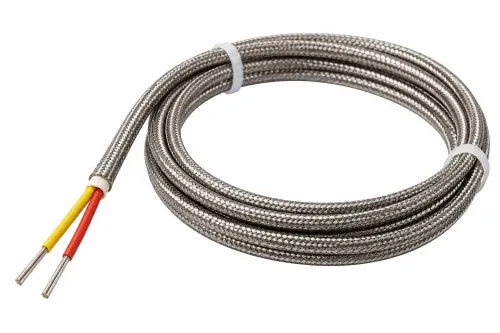
| Fiberglass braided cable | Protects silicone from abrasion and supports higher surface-temperature exposure | The braid is not automatically an electrical insulation layer; moisture, contamination, and fraying reduce protection |
| Silicone-glass construction | Combines flexible insulation with a protective glass-fibre layer | The larger finished diameter requires more routing space and gentler bends |
A braid does not rescue poor installation. Bending below the stated minimum bend radius, forcing a cable around a sharp edge, or clamping it tightly concentrates stress until the conductor strands or insulation crack. Pulling the cable by its braid can also separate the braid from the insulation.
Treat movement as a design requirement, not a visual impression. A manually repositioned lead is not automatically a drag chain cable: continuous travel needs suitable strand construction, conductor lay, bend radius, torsion control, and cycle-life data.
Keep unsupported weight off the braid, prevent twisting at terminations, and provide strain relief that grips the cable body rather than crushing its insulation.
How to verify that a high-temperature cable claim matches your application
Approve a high-temperature cable only when its documented construction matches your temperature, load and movement—not because “silicone” appears in the product name.
The cable datasheet must state continuous and short-term temperature limits, voltage rating, conductor size, current capacity or derating method, minimum bend radius, flexing conditions and chemical restrictions. IEC 60245-3 can support a heat-resistant silicone-rubber cable claim, but it does not automatically cover flame, oil, appliance, machinery or North American approval requirements.
| Generic claim | Evidence that makes it useful |
|---|---|
| “Flexible” | Conductor stranding, flexing mode, cycle limits and minimum bend radius |
| “High temperature” | Continuous rating, peak exposure duration and ampacity at the stated ambient temperature |
| “Silicone cable” | Insulation construction, conductor material, braid or shield, voltage rating and termination limits |
| “Certified” | Named standard, test report, marking and batch identification |
Ask the supplier these questions:
- Is the conductor tin-plated or nickel-plated copper, and does its resistance suit the load and termination method?
- What current remains permissible at your ambient temperature, cable grouping and installation method?
- Does the cable tolerate repeated bending, torsion or only occasional repositioning?
- What happens after contact with oil, solvents, moisture, abrasion or a hot metal edge?
Rewari Cable Industries should provide construction and traceability details for its silicone cable range, not just a temperature figure. For thermocouples, verify alloy, polarity and calibration type; ordinary copper under silicone can create measurement errors. For RTDs, confirm matched leads and correct three-wire or four-wire termination.
Related products
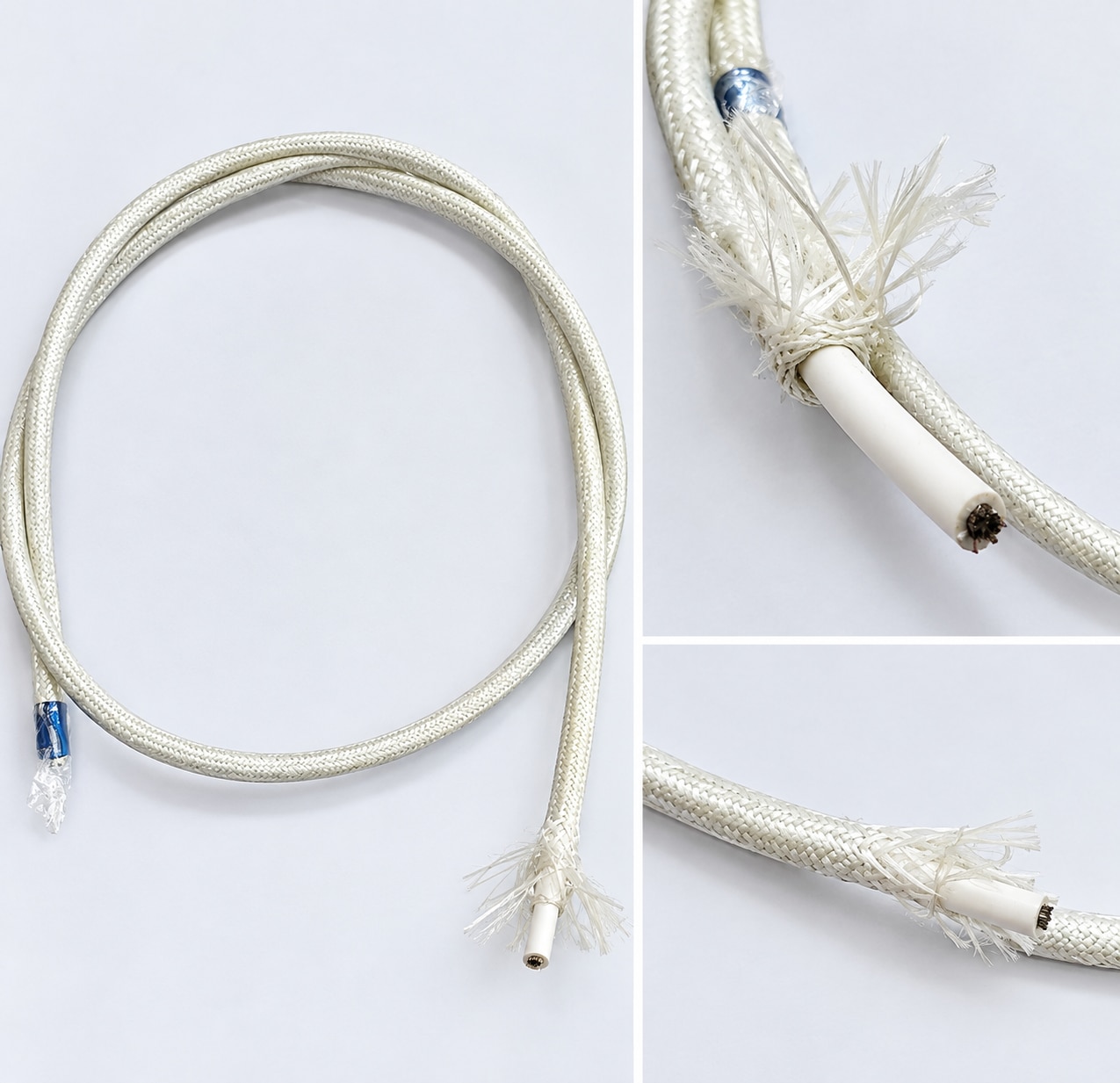 | Silicone Wire Rewari Cable Industries Silicone FG Cables are high-temperature, flexible electrical cables designed with silicone rubber insulation and fiberglass... View product → |
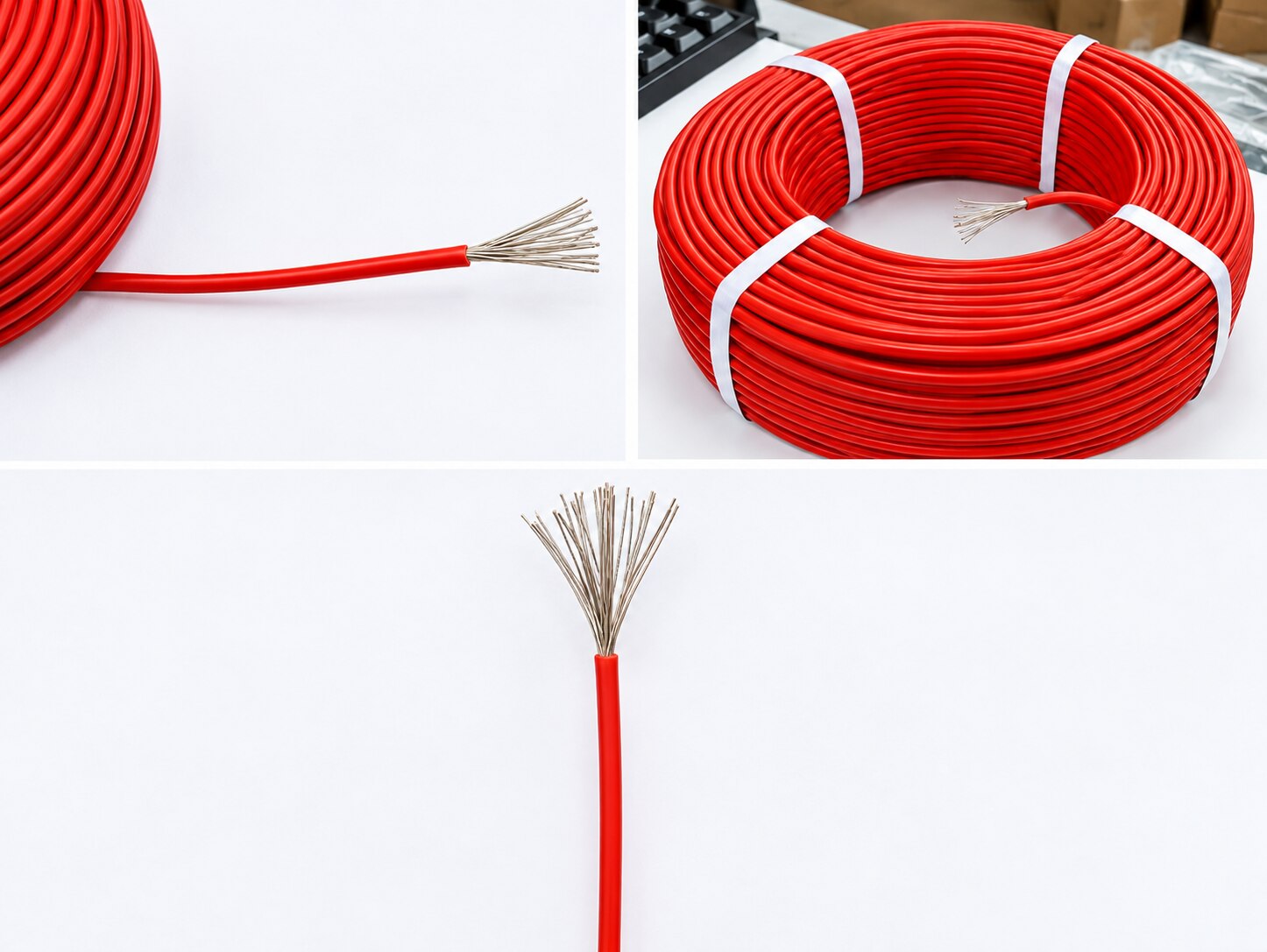 | Silicone Rubber Insulated Wires Cables Silicone Rubber Insulated Wires Cables Silicone Rubber Insulated Wires & Cables – Rewari Cable Industries Silicone Rubber Insulated Wires & Cables are specially designed for electrical and... View product → |
Frequently asked questions
Why does flexible high-temperature wiring need specialised construction?
Heat resistance and repeated movement stress different cable features. Silicone helps retain flexibility at elevated temperatures, but it does not set the cable’s ampacity, voltage, abrasion life or bend rating.
What information should you provide when specifying high-temperature cable?
State the continuous and peak temperature, operating current, system voltage, bend radius, flex frequency, travel distance and exposure to oil, chemicals or abrasion.
When is silicone cable suitable, and when is it not enough?
Silicone cable suits applications that need flexible insulation at elevated temperatures. Add protection or choose another construction when the installation involves oil, sharp edges, crushing, severe abrasion or continuous flexing.
What does a fiberglass braid add to high-temperature cable?
Fiberglass braid adds mechanical protection and a heat-resistant outer layer. It does not automatically increase ampacity, voltage rating or suitability for every chemical environment.
How can you verify a high-temperature cable claim?
Compare the datasheet’s temperature, voltage, current, bend-radius, flex-life and environmental ratings with your actual installation conditions. Ask for test methods and construction details when a rating is unclear.
Related products
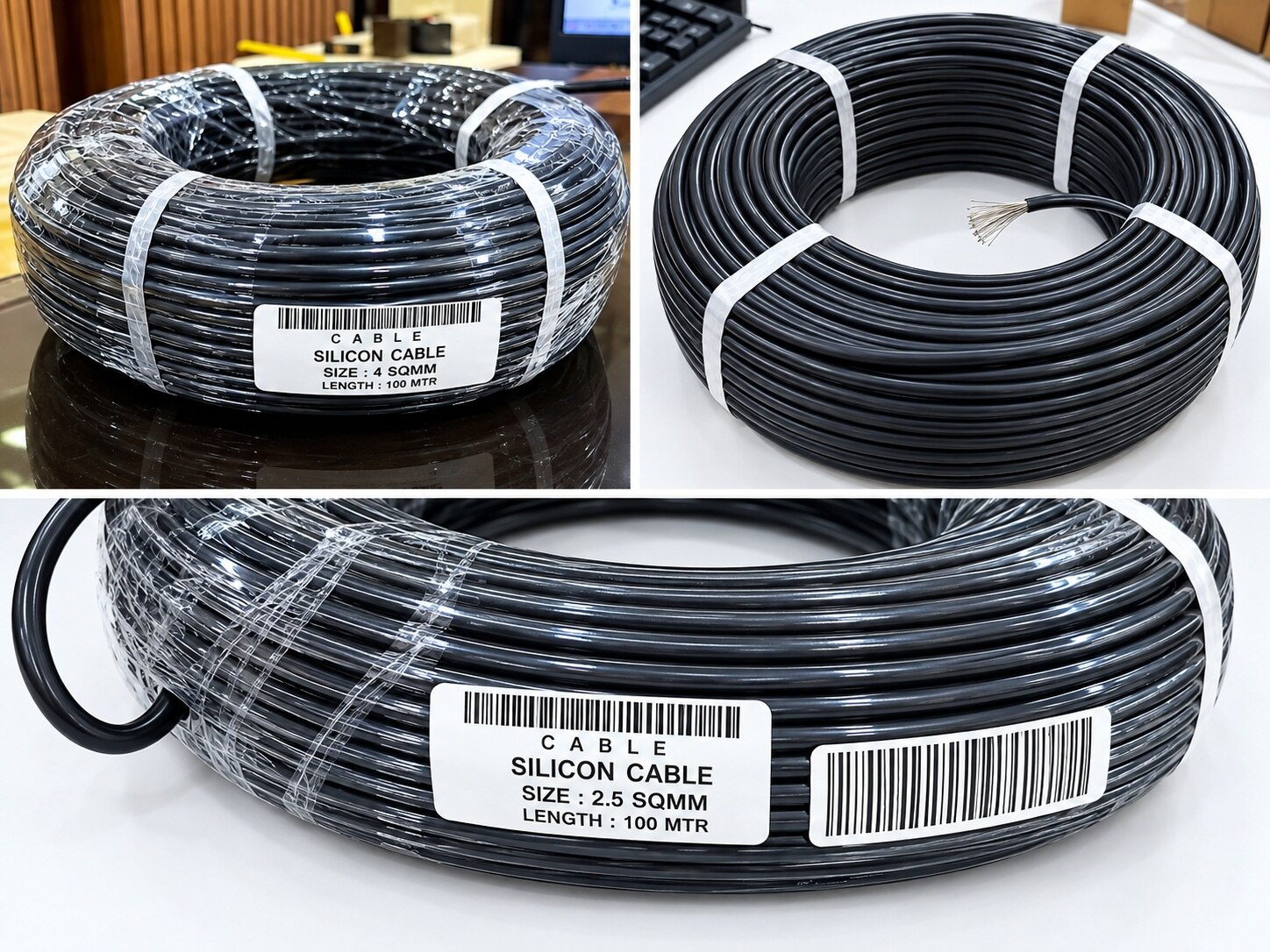 | Silicone Insulated Cables Rewari Cable Industries Silicone Insulated Cables are high-performance electrical cables designed for applications requiring high-temperature... View product → |
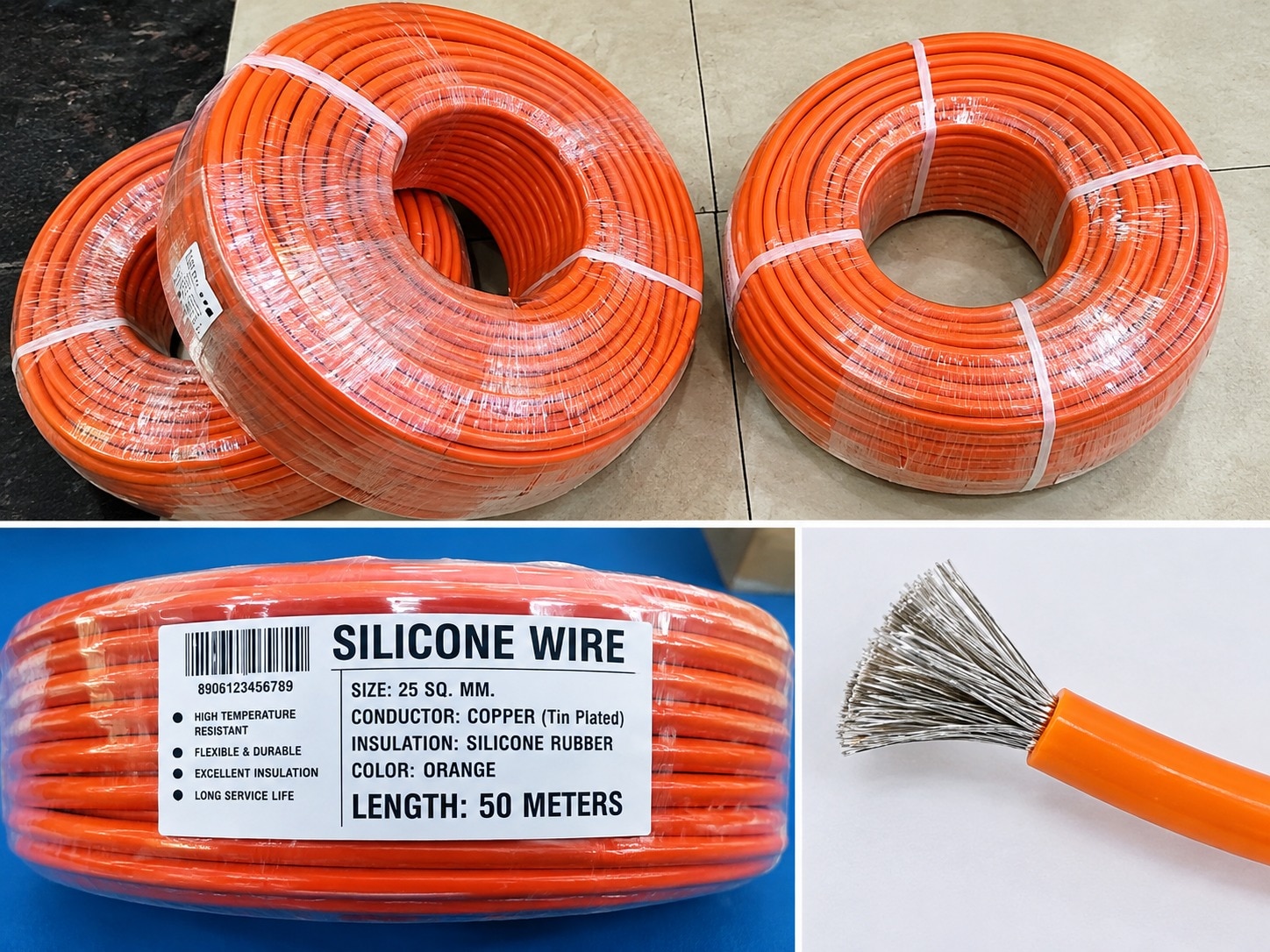 | Silicone Rubber Insulated Cable Silicone Rubber Insulated Cable Rewari Cable Industries Silicone Rubber Insulated Cables are high-performance flexible cables designed for electrical and industrial applications... View product → |
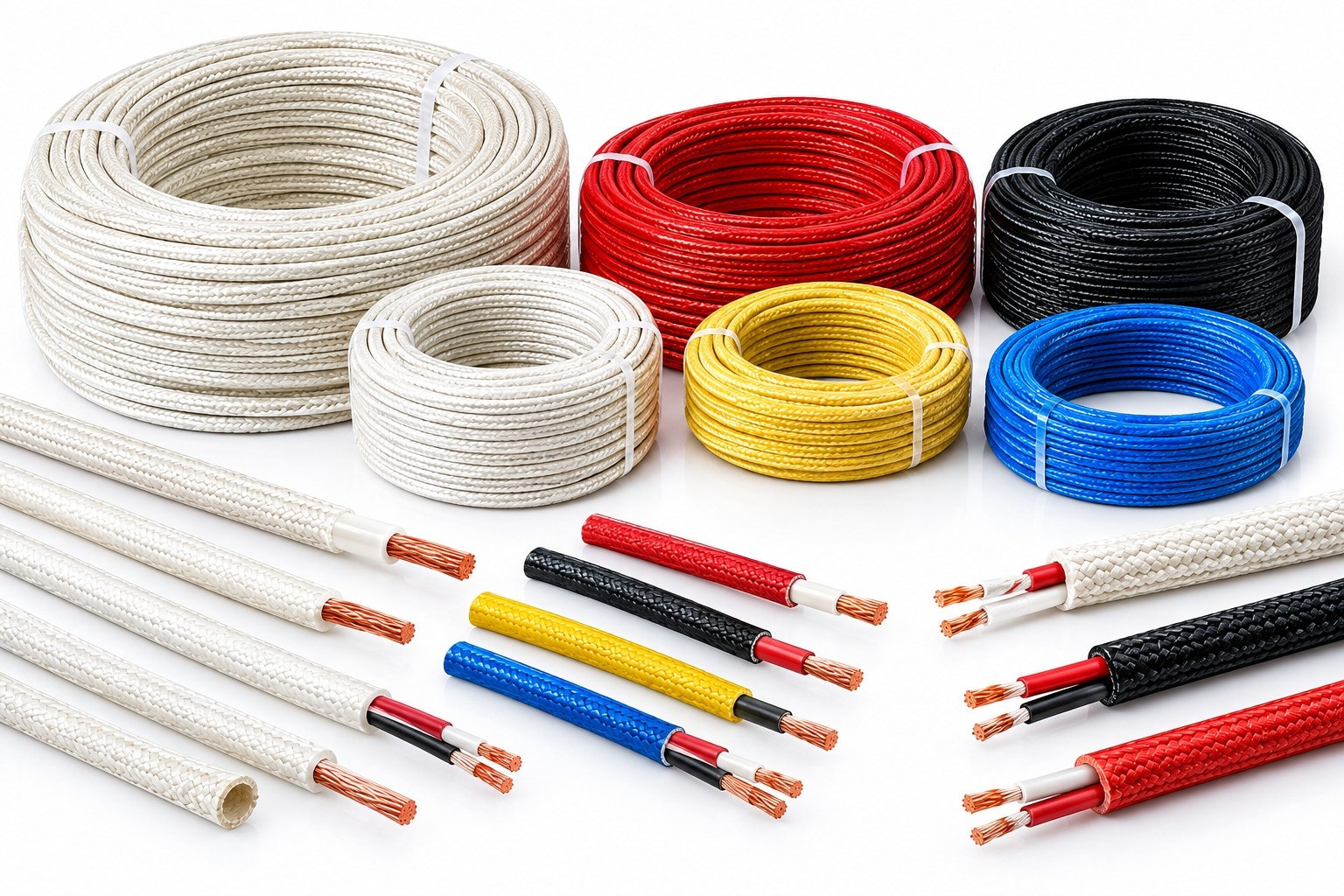 | Fiberglass Cable Rewari Cable Industries Fiberglass Cables and Fiberglass Insulated Wires are designed for electrical and industrial applications requiring... View product → |
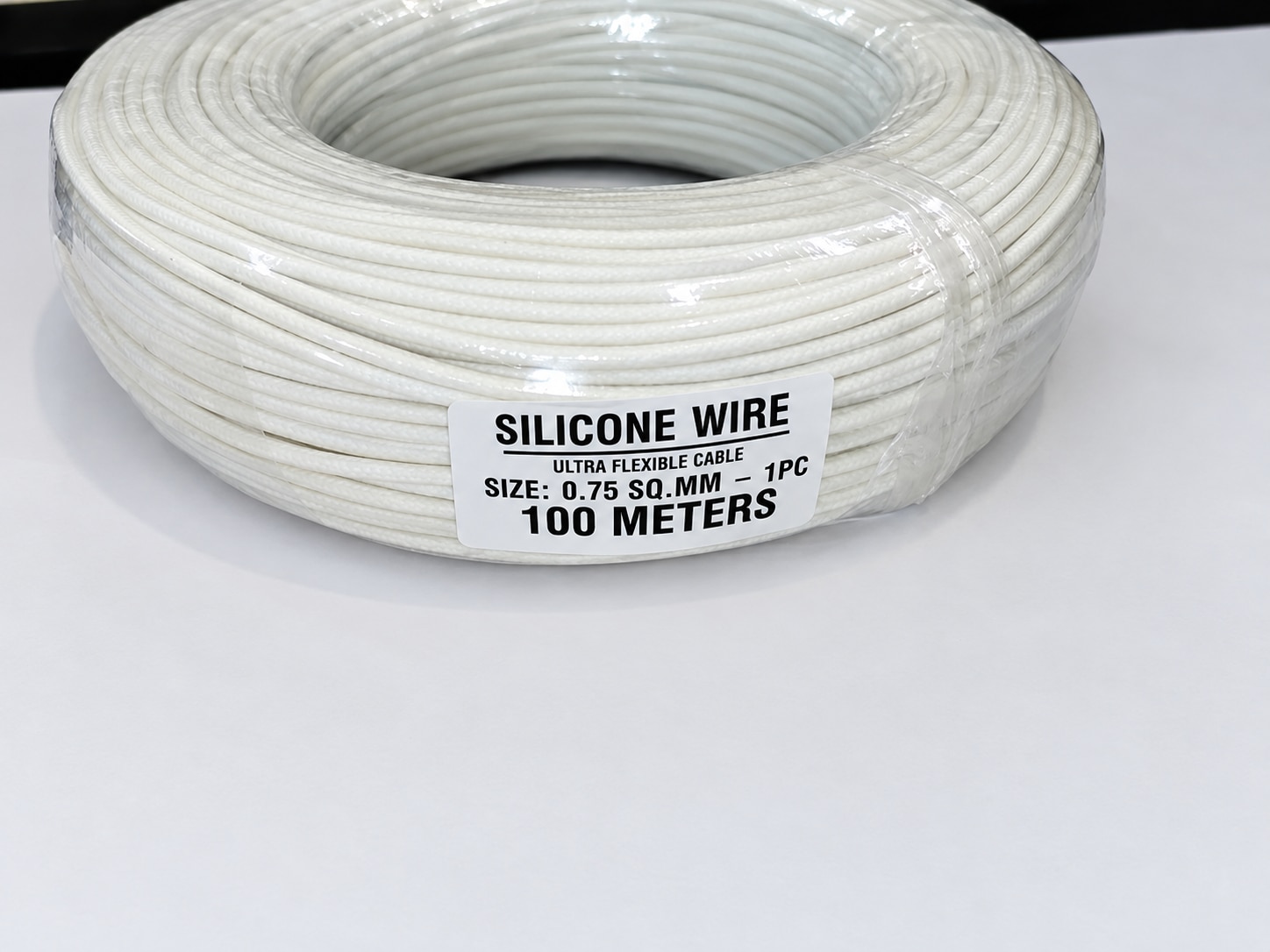 | Silicone Wire by Rewari Cable Industries is designed for applications requiring flexible, reliable and heat-resistant electrical wiring. View product → |