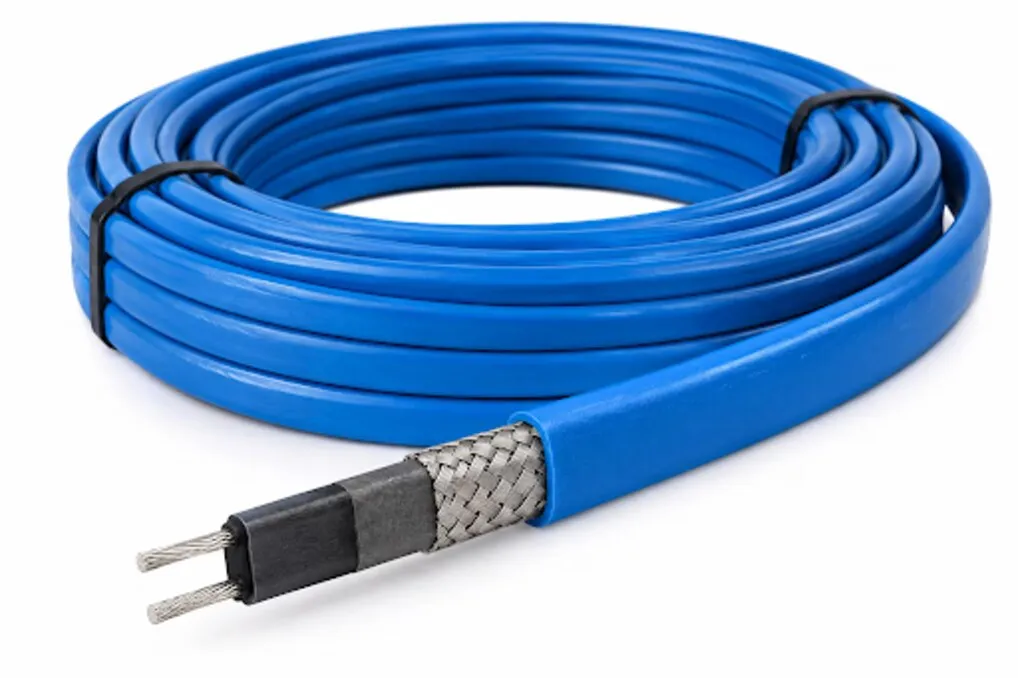
A dependable supplier must prove that its cable or sensor will survive your actual temperature, electrical, mechanical, and chemical conditions—not merely quote a headline temperature rating. By the end, you will have a specification, evidence checklist, and comparison method for separating a controlled manufacturer from a reseller.
Key takeaways
- Write voltage, temperature, insulation, shielding, and mechanical requirements before requesting quotes.
- Test cable ratings against ambient heat, bending, abrasion, chemicals, and installation conditions.
- Request batch records, test certificates, calibration evidence, and traceability documents.
- Approve the complete sensor, extension cable, compensating cable, and instrument combination.
Define the cable specification before comparing manufacturers
Fix the electrical, thermal, mechanical, and sensing requirements before requesting a quotation; otherwise each manufacturer will price a different cable. State:
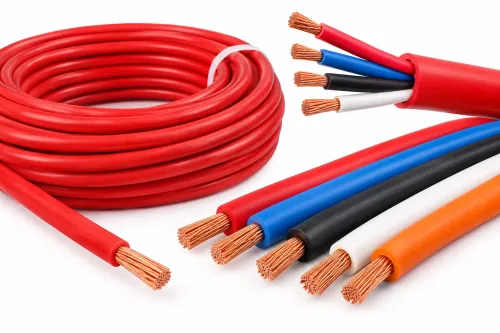
1. The conductor material, cross-sectional area, core count, conductor size, and IEC 60228 conductor classes. Identify whether the cable is fixed, flexible, or repeatedly flexed.
2. The insulation system, jacket material, shielding or braid, chemical exposure, bend radius, tensile load, and installation route. Include tray, conduit, radiation, grouping, and termination conditions.
3. The temperature rating and voltage rating, along with minimum installation temperature, flexing temperature, maximum conductor and jacket temperatures, terminal limit, and short-circuit temperature. The lowest applicable limit governs. Ask for an IEC 60216 ageing basis rather than accepting a brief heat test or melting-point claim.
4. The required current, duty cycle, and permissible voltage drop. Require a rating calculated for the installation under IEC 60287; conductor resistance rises with temperature, so room-temperature figures can understate heat loss.
5. For thermocouples, name the type, temperature range, tolerance class, polarity identification, insulation construction, shielding, and whether the cable is thermocouple-grade or extension-grade under IEC 60584-1 and IEC 60584-3. For RTDs, specify Pt100, Pt500, or Pt1000, IEC 60751 tolerance class, lead configuration, and whether accuracy includes lead resistance and self-heating.
Send this complete schedule to every bidder and reject quotations that substitute a material, rating, conductor class, or sensor configuration without written approval.
Test the rating against the real installation
A published rating applies only after you recalculate it for the installed assembly, not when you copy the catalogue’s ampacity. Use the IEC 60287 current-rating framework to account for:
- Ambient temperature
- Conductor resistance
- Grouping with other loaded cables
- Conduit or tray arrangement
- Nearby heat or radiation
- Duty cycle
Check the termination temperature separately. A cable that survives at its conductor limit can still overheat a lug or gland because of poor contact or inadequate thermal clearance.
Compare the installation with every stated limit:
- Maximum conductor and insulation or jacket temperatures
- Terminal temperature at the actual connection
- Minimum installation temperature
- Flexing temperature and bend radius
- Allowable short-circuit temperature
The lowest applicable limit governs. Higher-rated insulation does not rescue an undersized conductor or a crowded tray.
Treat long-term temperature claims as ageing claims, not melting-point claims. IEC 60216 thermal endurance evaluation expresses ageing through a temperature index or relative thermal index; request the ageing basis and continuous-use limit. A brief oven exposure is not equivalent evidence.
Fire claims need separate test evidence:
| Test | What it establishes | Do not infer |
|---|---|---|
| IEC 60332 | Flame propagation behaviour | Not low smoke or halogen-free |
| IEC 60754 | Halogen-acid gas and corrosivity | Not flame resistance |
| IEC 61034 | Smoke density | Not zero halogens |
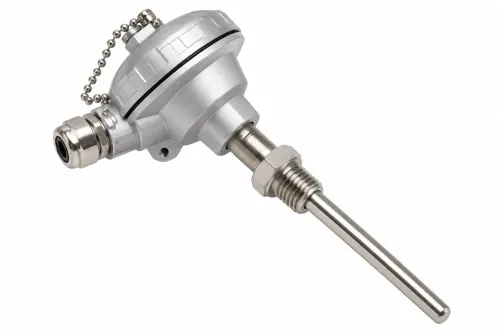
For a temperature sensor, request response-time data with the sheath diameter, thermowell, immersion depth, process velocity and mounting contact stated. Installation changes the time constant, so an unqualified “fast response” figure cannot support a supplier comparison.
Verify the manufacturer’s quality controls and records
A reseller can forward a datasheet; a controlled manufacturer can connect your delivered cable to inspected materials, defined process checks, and recorded test results. Ask for traceability from the batch or lot number to conductor, insulation, shield, and jacket material records, not a certificate bearing only a product name.
Request these records before approval:
- Incoming-material inspection showing conductor size or resistance, insulation dimensions, and material identity against the purchase specification.
- Production controls covering extrusion or braiding settings, line inspections, core identification, dimensional checks, and handling of nonconforming product.
- Routine electrical results for continuity, insulation resistance, and voltage withstand, linked to your batch number.
- A documented corrective-action report for failures, including root cause, disposition, and verification that the fix worked.
- Calibration records for test equipment, with due dates and equipment identification.
A calibration certificate alone does not prove measurement competence. Check the issuing laboratory’s scope, measured points, method, uncertainty, and traceability chain; ISO/IEC 17025 accreditation applies to the laboratory’s competence and controlled methods, not automatically to every in-house certificate.
For Rewari Cable Industries, apply the same test to a thermocouple or RTD order: require the sensor calibration certificate, cable batch number, and the continuity and insulation-resistance results for the supplied assembly. A credible manufacturer answers with controlled records; a reseller usually offers generic certificates that cannot be tied to your lot.
Related products
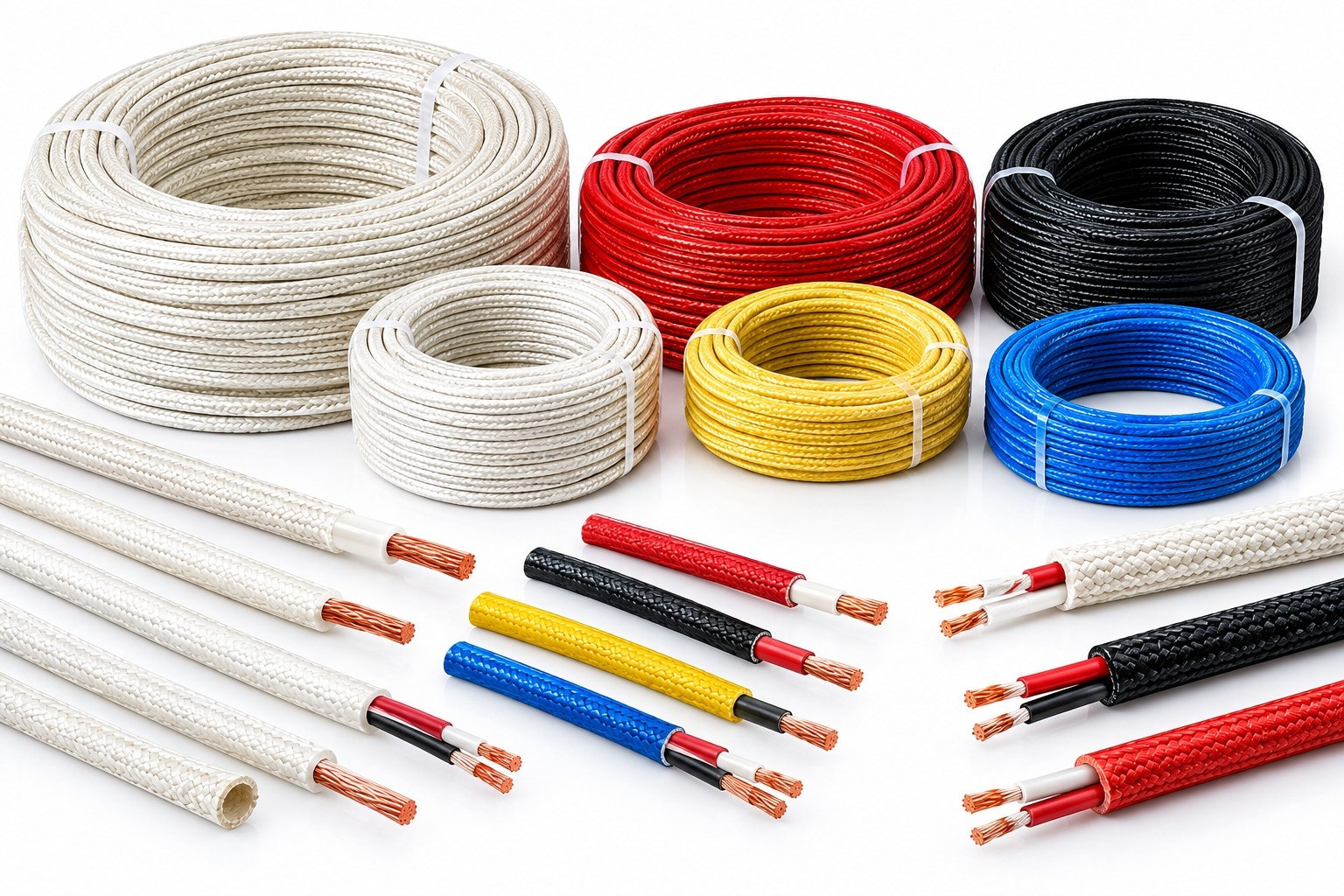 | Fiberglass Cable Rewari Cable Industries Fiberglass Cables and Fiberglass Insulated Wires are designed for electrical and industrial applications requiring... View product → |
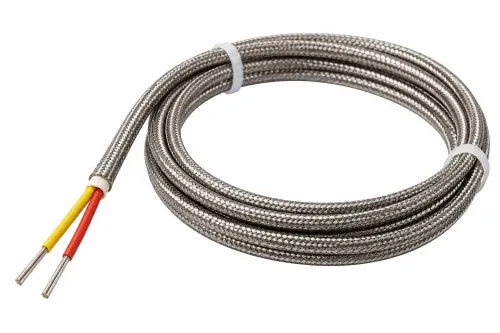
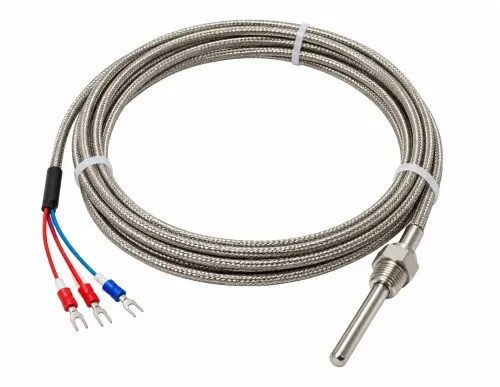
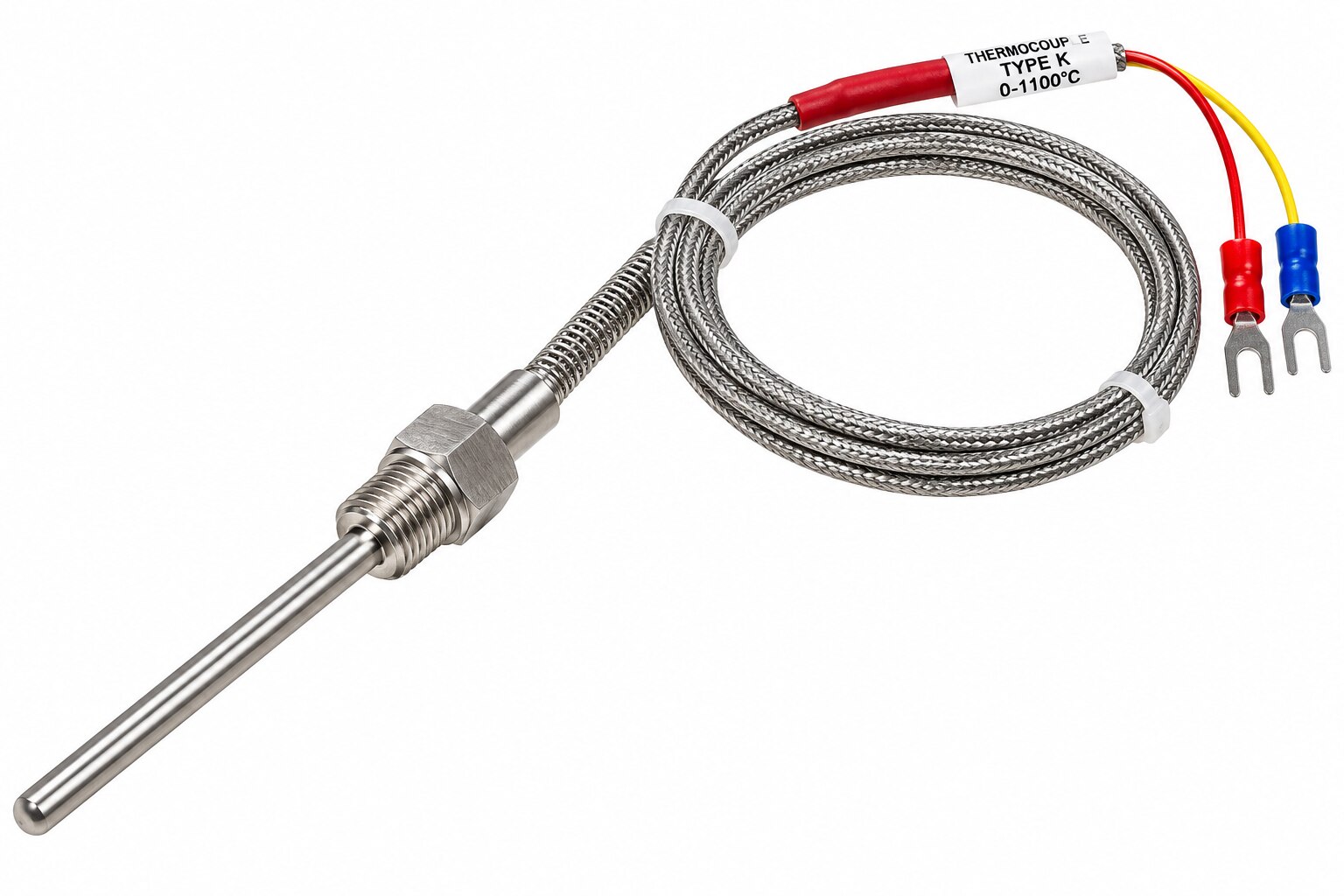 | Thermocouple Sensor Manufacturer & Supplier Rewari Cable Industries offers reliable and high-quality Thermocouple Sensors designed for accurate temperature measurement... View product → |
Match the sensor, cable, and measuring instrument
Choose an RTD for stable, high-accuracy measurement and a thermocouple for broader temperature range, faster response, or harsher installation conditions. Confirm that the transmitter or PLC input accepts the sensor type before selecting the cable.
| System | Standard and cable choice | Lead configuration |
|---|---|---|
| RTD | IEC 60751; specify Pt100, Pt500, or Pt1000 and tolerance class | Two-wire, three-wire, or four-wire RTD cable |
| Thermocouple | IEC 60584-1 for type and tolerance; IEC 60584-3 for extension or compensating cable | Match cable type, polarity, and instrument input |
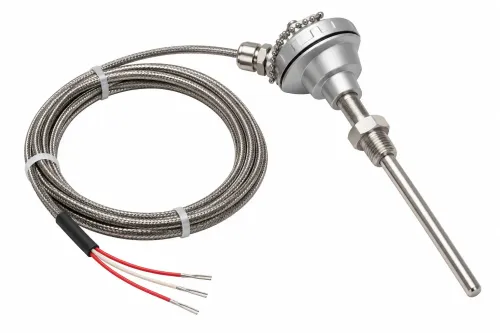
A two-wire RTD adds both lead resistances to the measured value, so include cable resistance in the error budget on long runs. Three-wire wiring compensates that error only when the lead resistances are closely matched. Four-wire measurement removes lead-resistance error far more effectively and suits precision transmitters.
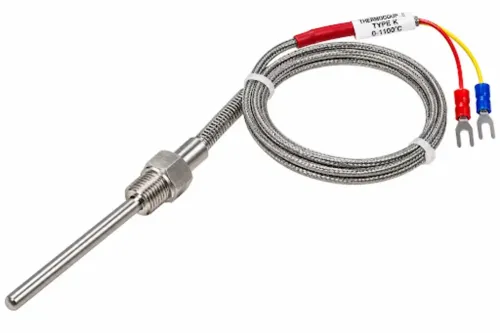
For a thermocouple, specify the type, tolerance class, temperature range, insulation, shielding, polarity identification, and whether the cable is thermocouple-grade or extension-grade. Do not substitute copper wire through a temperature-gradient zone; its extra junctions can create a large reading error.
Match the quoted response time to the installation, not just the sensor datasheet. Sheath diameter, thermowell, immersion depth, process velocity, mounting contact, and protective construction determine the actual time constant. A supplier’s accuracy claim is incomplete without the sensor value, class, wiring, range, and whether self-heating and lead resistance are included.
Compare quotations through acceptance criteria, not price alone
Approve the quotation only after every supplier has priced the same acceptance criteria. Put conductor material, insulation, core count, cross-sectional area, shielding, braid, jacket, bend radius, voltage rating, and temperature limits into one comparison schedule. A cheaper offer that omits a sheath, test, or termination requirement is not equivalent.
Request these documents with the quotation:
| Item | Accept before installation | Disqualify or clarify |
|---|---|---|
| Technical datasheet | States ratings, operating limits, standards, and test conditions | Rating is given without conductor, jacket, terminal, or flexing limits |
| Dimensional drawing | Shows finished diameter, core layout, sheath, termination, and bend radius | Drawing is missing or differs from the quoted assembly |
| Material declaration | Identifies conductor, insulation, sheath, alloys, and plating | “High-temperature material” is the only description |
| Test certificate | Identifies batch number and records continuity, insulation resistance, and voltage-test results | Certificate is undated, generic, or unrelated to the supplied lot |
| Sensor records | Calibration certificate states points, uncertainty, sensor type, and serial number | Thermocouple type, polarity, or calibration conditions are absent |
Inspect the delivered sample against the dimensional drawing and markings before installation. Measure continuity and insulation resistance, then perform the specified voltage test. For heaters, compare cold resistance with the quoted hot-resistance assumptions, voltage, and power.
For sensors, confirm the extension cable matches the thermocouple type and polarity, and reject response-time claims that omit sheath diameter, mounting, immersion, or test temperature.
Frequently asked questions
What cable details should you define before comparing manufacturers?
State the voltage, conductor material and size, insulation and sheath materials, temperature range, shielding, number of cores, length, termination, bending radius, chemical exposure, and required standards.
How do you check whether a cable rating suits the installation?
Compare the published temperature, voltage, bend, abrasion, moisture, and chemical ratings with the conditions at the hottest, most exposed, and most frequently moved sections of the installation.
Which quality records should you request from a cable manufacturer?
Request a product datasheet, routine test results, batch or lot number, conductor resistance results, insulation resistance results, dimensional checks, material traceability, and calibration certificates for test equipment.
How do you match a temperature sensor cable to the measuring instrument?
Confirm the sensor type, thermocouple calibration, conductor material, polarity, extension or compensating cable designation, shielding, junction arrangement, and instrument input before ordering.
How should you compare industrial cable quotations?
Compare each quote against the same written specification and acceptance criteria, including test documents, tolerances, delivery scope, warranty, replacement terms, and approved deviations—not price alone.
Related products
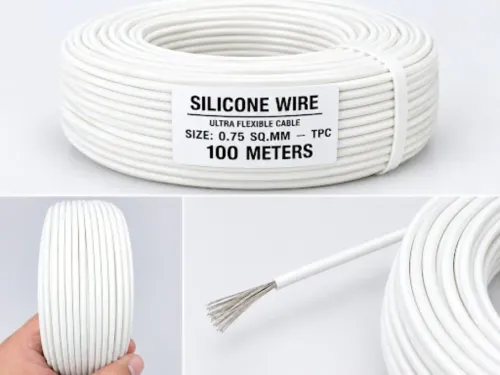
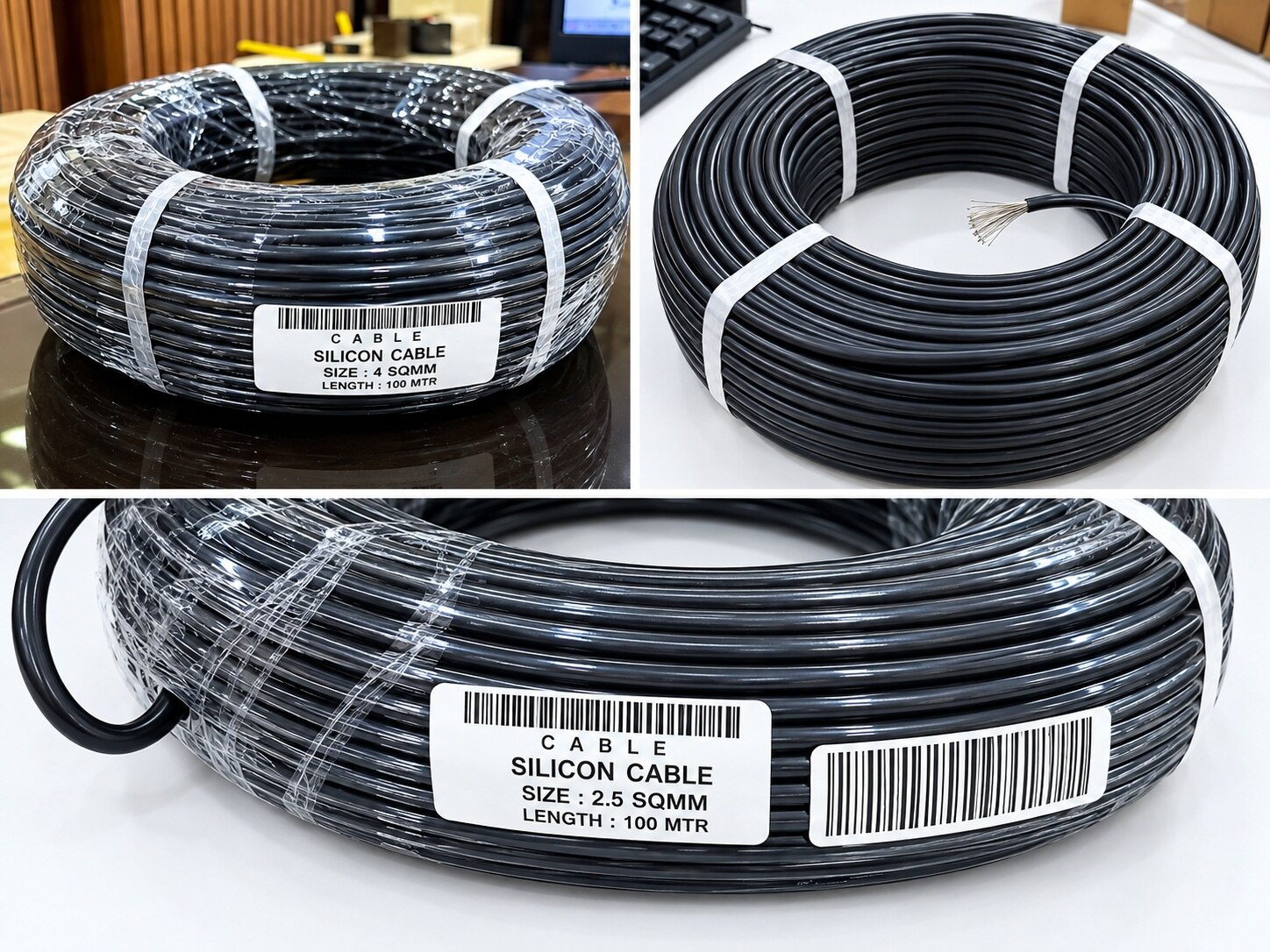 | Silicone Insulated Cables Rewari Cable Industries Silicone Insulated Cables are high-performance electrical cables designed for applications requiring high-temperature... View product → |
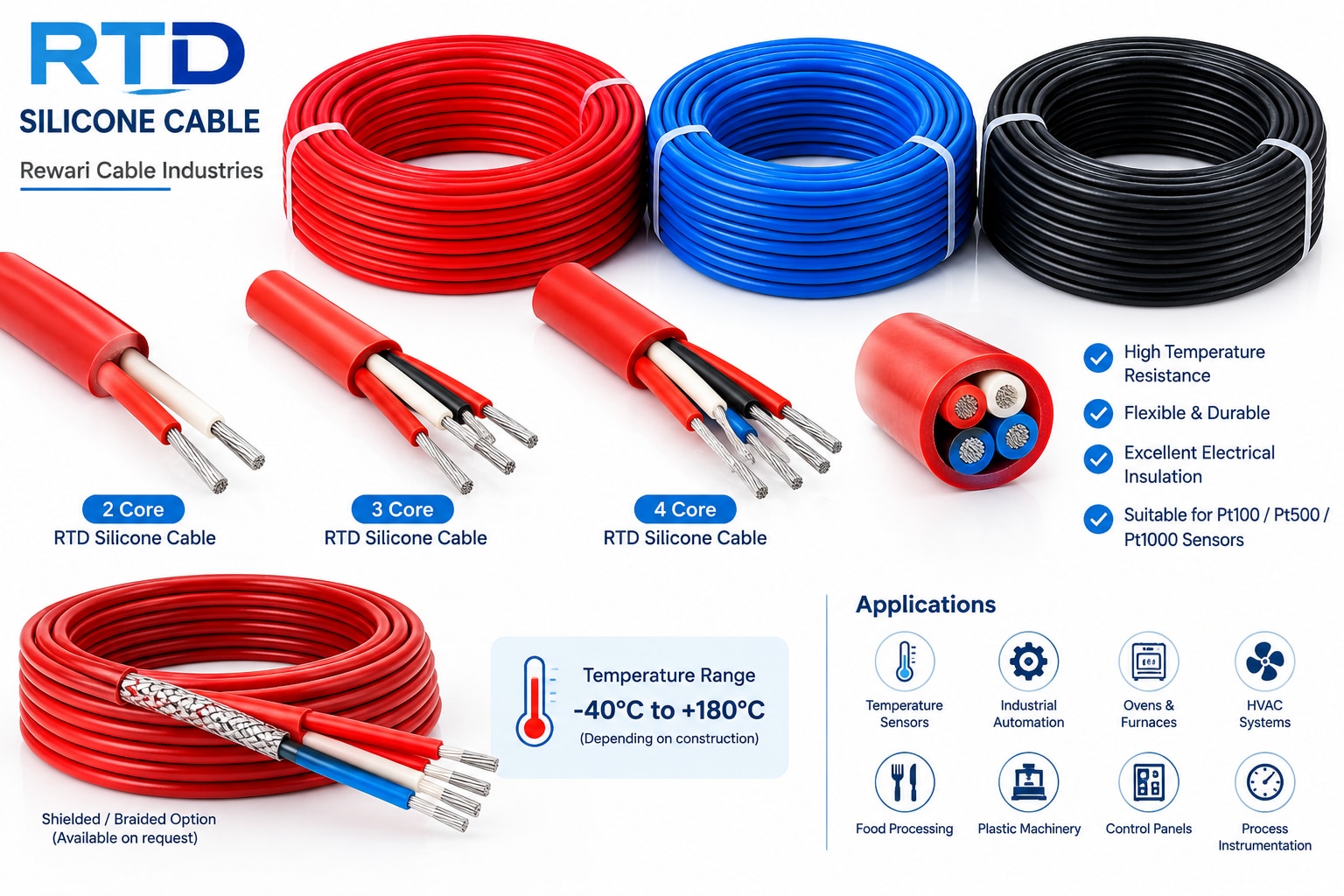 | RTD Silicone Cable Rewari Cable Industries offers RTD Silicone Cables designed for temperature measurement and signal transmission in industrial environments. View product → |
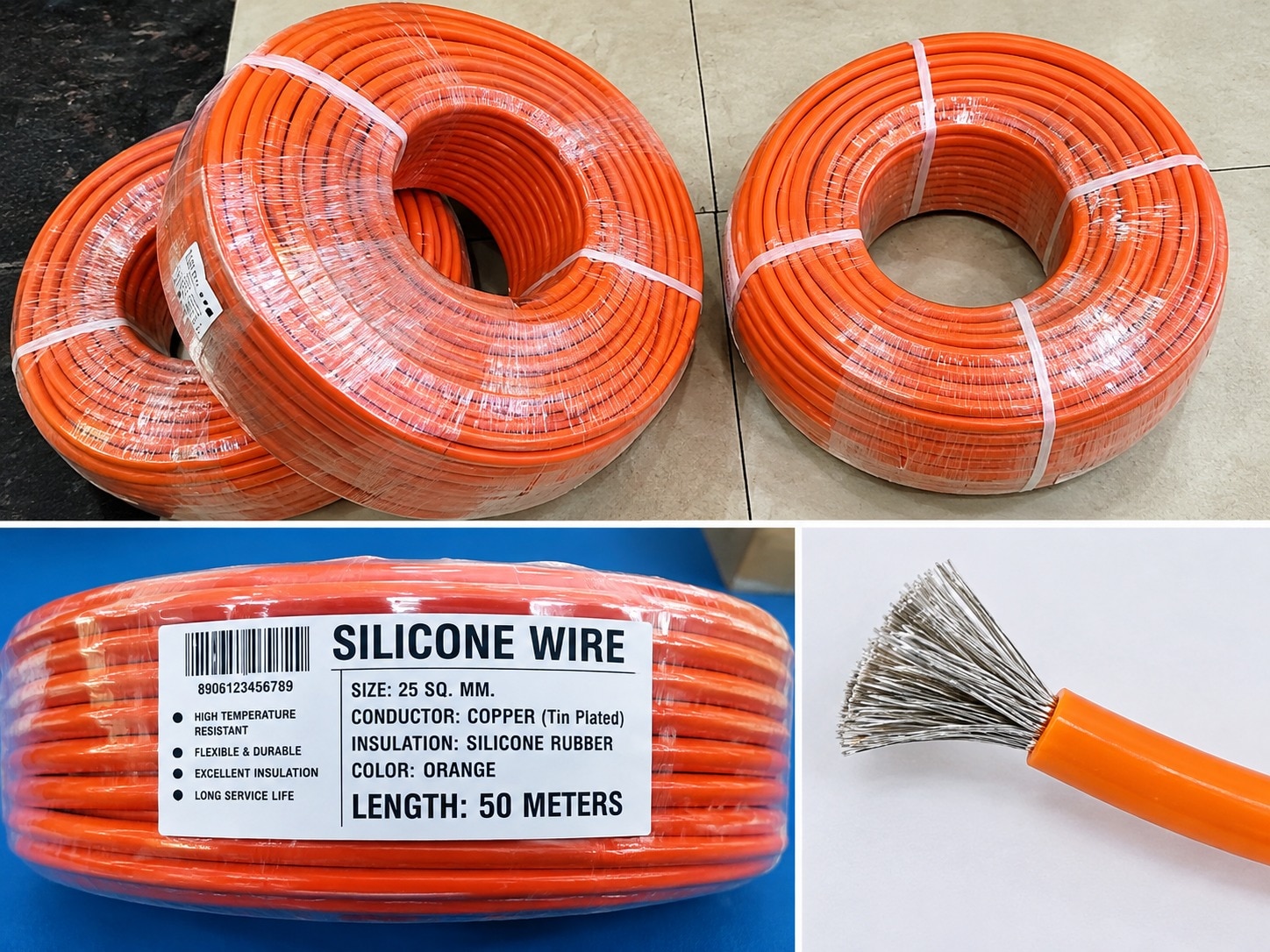 | Silicone Rubber Insulated Cable Silicone Rubber Insulated Cable Rewari Cable Industries Silicone Rubber Insulated Cables are high-performance flexible cables designed for electrical and industrial applications... View product → |
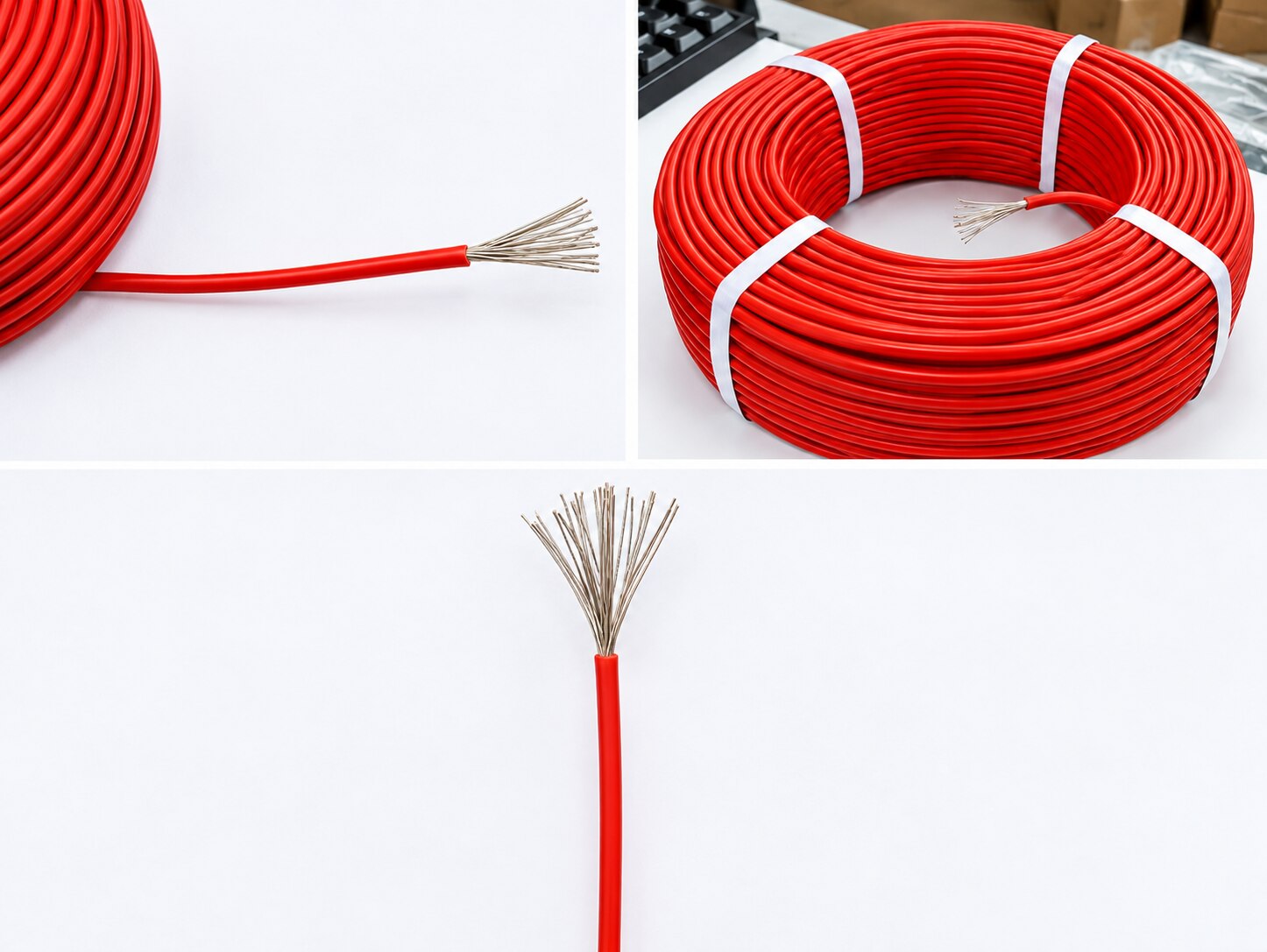 | Silicone Rubber Insulated Wires Cables Silicone Rubber Insulated Wires Cables Silicone Rubber Insulated Wires & Cables – Rewari Cable Industries Silicone Rubber Insulated Wires & Cables are specially designed for electrical and... View product → |