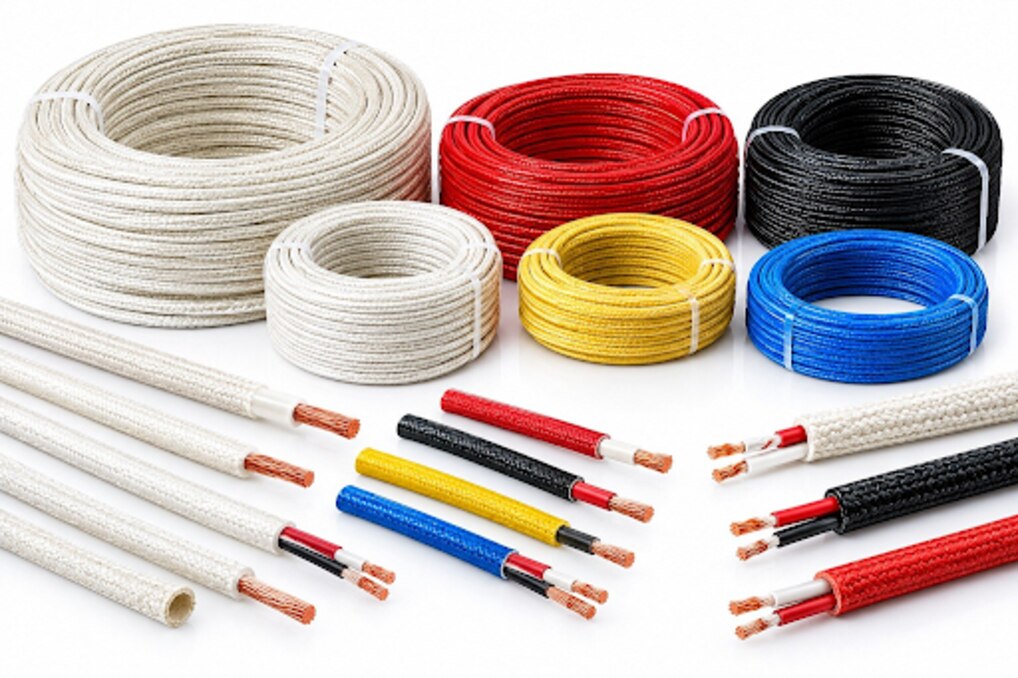
A high-temperature cable is only as reliable as its weakest component, and the insulation’s headline temperature is not the same as the circuit’s allowable current or assembly rating. By comparing construction, atmosphere, movement, electrical load, installation, and termination requirements, you can select a wiring solution that remains safe through heat cycles instead of failing at the first hot-to-cool transition.
Key takeaways
- Size wiring from worst-case voltage, current, temperature, and duty cycle.
- Compare conductor, insulation, braid, and sheath ratings as one complete system.
- Specify flexibility, chemical exposure, movement, and sensor compatibility before approval.
- Request test reports, construction details, and traceable batch documentation from the manufacturer.
Start With the Circuit and Installation Conditions
Define the actual requirements from the worst point in the installation: circuit voltage, load current, conductor temperature, ambient temperature, duty cycle, and terminal temperature.
A 200 °C insulation rating does not permit 200 °C operation at the same current; apply cable ampacity derating for elevated ambient temperature, grouped cables, enclosure heat, and the terminal’s lower limit.
Record these conditions before comparing high temperature wiring solutions:
- Measure the hottest conductor location, not only the surrounding air. Include start-up peaks, continuous exposure, and heat cycling.
- Specify routing, minimum bend radius, vibration, abrasion, moisture, steam, and contact with oils, halogens, sulfur compounds, reducing gases, or molten salts.
- Check the conductor metal, strand flexibility, voltage insulation, shielding, braid treatment, and termination space.
- Put strain relief outside the hottest zone and identify the hot-to-cool transition. Thermal expansion and vibration can loosen terminals, abrade braid, or fracture strands.
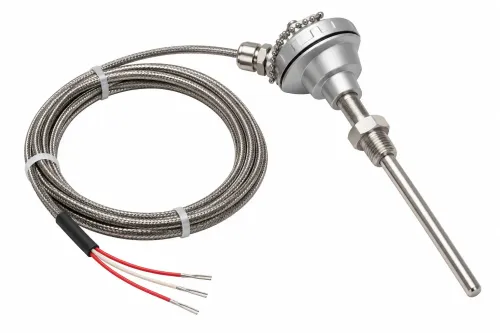
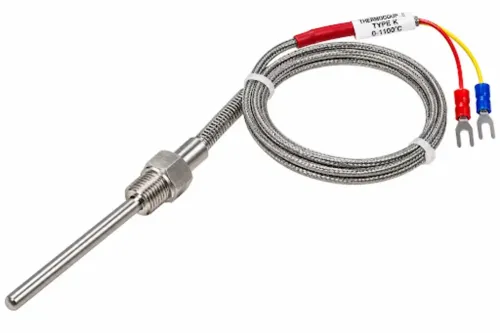
- For thermocouples, state the type, polarity, extension or compensating alloy, temperature range, connector metals, and reference-junction method. Copper inserted into the circuit or reversed polarity creates measurement error.
| Condition | Compare | Failure if missed |
|---|---|---|
| Power load | Cable ampacity at actual conductor and terminal temperatures | Overheating despite high insulation rating |
| Hot atmosphere | Dry-air rating versus chemical exposure and duty cycle | Braid, plating, alloy, or sheath attack |
| Fire requirement | IEC 60331 circuit-integrity test versus continuous operating rating | Treating fire survival as a long-term temperature rating |
| Thermocouple lead | Matching grade and polarity through the entire circuit | Temperature-dependent reading error |
Read the Complete Insulation System, Not Just the Temperature Number
A fiberglass cable temperature rating describes a construction, not the melting point of glass. Continuous-use limits for commercial fiberglass-braided cables commonly fall around 200–450 °C; the binder, inner insulation, conductor plating, atmosphere, and terminals determine the tested limit. Short exposure above that limit does not make continuous operation acceptable.
| Construction | Practical continuous range | Electrical and environmental protection | Main limitation |
|---|---|---|---|
| Fiberglass braid | About 200–450 °C | Good heat separation and abrasion protection; weak moisture and oil barrier | Wicks water and flux; can become brittle |
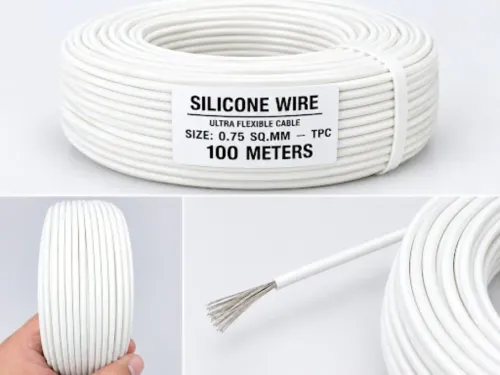
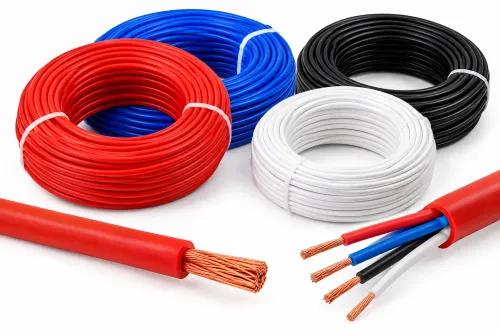
| Silicone FG cable | About 180–250 °C | Silicone rubber insulation adds dielectric protection and flexibility; fiberglass improves surface durability | Braid still needs protection in wet or chemical service |
| Silicone rubber insulation | About 180–200 °C | Flexible, high dielectric strength, good vibration tolerance | Tears or abrades more easily than a braided cover |
| PTFE | About 200–260 °C | Excellent dielectric performance and resistance to oils and chemicals; low moisture absorption | Stiffer and harder to terminate; confirm the PTFE cable temperature rating |
| PVC | About 70–105 °C | Economical insulation with adequate everyday dielectric protection | Softens, ages, and loses insulation margin at high heat |
| Mica | About 500–1,000 °C | Strong dielectric barrier for extreme heat | Brittle, bulky, and difficult to bend or terminate |
| Ceramic | About 600–1,000 °C | Exceptional heat and dielectric resistance | Fragile and unsuitable for repeated flexing |
Treat every rating as an assembly limit. A gland, crimp, connector, terminal block, or feedthrough rated below the cable governs the result. High insulation temperature also does not increase ampacity; conductor heating, grouping, enclosure temperature, and terminal limits still control allowable current.
Match the Construction to Movement, Chemicals, and Measurement
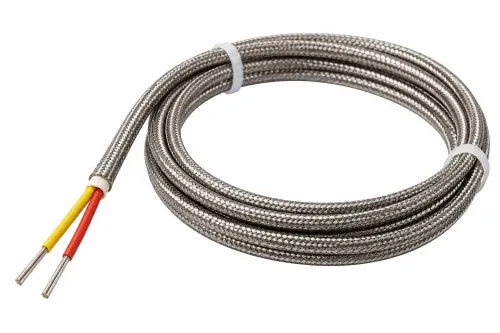
Fiberglass is the right choice for a dry, hot installation where the cable stays mostly still and needs thermal separation or abrasion protection. A fiberglass braid is not a moisture barrier: it can wick water, oil, or molten flux, then become brittle after prolonged heat.
Choose a jacketed construction when cleaning, chemicals, or repeated flexing matter more than peak temperature.
| Option | Main strength | Choose it when |
|---|---|---|
| Fiberglass braid | Thermal protection and abrasion resistance | The route is dry, hot, and mechanically stable |
| Silicone FG | Flexibility with a fiberglass heat shield | A flexible high temperature cable must move near a hot zone, but chemical exposure is limited |
| PTFE or PFA | Low absorption and strong chemical resistance | PTFE cable chemical resistance, cleanability, or moisture protection is critical |
| Mineral insulated cable | Small diameter and very high temperature capability | Space is tight and the route is rigid; seal the hygroscopic magnesium-oxide ends |
| Ceramic or ceramic-fiber | Extreme heat tolerance | The cable remains nearly stationary and flexibility is not required |
Movement decides more than the headline temperature. Put strain relief outside the hottest zone, protect the hot-to-cool transition, and avoid repeatedly bending MI or ceramic cable at its termination. A cable rating also does not rate its gland, terminal, crimp, or connector; the lowest-rated part limits the assembly.
For temperature measurement, use extension or compensating wire matched to the thermocouple type, polarity, alloy, and temperature range. Ordinary high-temperature hookup wire, or copper substituted into the circuit, creates temperature-dependent error.
Install and Terminate High-Temperature Wiring Without Damaging It
High-temperature cable installation preserves its rating only when routing, support, and cable termination are designed as one assembly. Keep strain relief outside the hottest zone, leave a gradual hot-to-cool transition, and respect the manufacturer’s minimum bend radius. Thermal cycling and vibration can otherwise pull strands from a terminal or fracture them at the temperature boundary.
- Route the cable away from sharp edges, moving parts, and abrasive supports. Use high temperature cable glands where the cable enters an enclosure, and verify that the gland’s temperature rating matches the entry location.
- Secure the cable without crushing its insulation or braid. Separate flexible cold-zone wiring from rigid hot-zone supports so expansion does not load the termination.
- Strip only the length required for the terminal. Use the specified stripping tool; a nicked conductor or damaged fiberglass braid creates a failure point. Do not cut through a metal sheath or moisture seal on mineral-insulated cable.
- Crimp with the terminal manufacturer’s die and calibrated tool. Match the terminal to conductor material, cross-section, current, and temperature; ordinary tin-plated hardware or polymer glands can limit the whole assembly.
- Use ceramic terminals for genuinely hot connection points, then inspect the finished termination for loose strands, exposed conductor, braid damage, poor crimp compression, and excess bend at the exit.
Seal MI cable ends against moisture before service. Confirm the installed assembly’s ampacity, insulation resistance, and continuity after routing, and repeat those checks after the first heat cycle.
What to Request From a Fiberglass Cable Manufacturer Before Approval
Approve the cable only after the supplier gives you construction-specific evidence, not a headline temperature. Ask for:
- A cable construction data sheet naming conductor metal, cross-sectional area, strand count, plating, insulation layers, fiberglass braid or sleeving, treatment or coating, jacket, shield, and terminal materials.
- A continuous operating-temperature rating for the complete assembly, plus the test method, atmosphere, voltage rating, dielectric withstand, insulation resistance, and short-duration exposure limit.
- The minimum bend radius, flexing or vibration limit, abrasion performance, chemical compatibility, moisture limitations, and installation restrictions.
- A certificate of conformity, batch or lot traceability, and test results tied to the quoted construction. A fiberglass braid alone does not prove a 500 °C rating; binder, inner insulation, conductor plating, terminals, and atmosphere control the result.
Compare the evidence by circuit type:
| Circuit | Details to verify | Approval risk |
|---|---|---|
| General power or control | Current, voltage, conductor temperature, insulation and braid ratings | Overheating or insulation breakdown |
| Thermocouple extension wire | Thermocouple type, polarity, alloy or compensating material, grade, range, connectors, and reference-junction assumptions | Temperature error from copper, reversed polarity, or dissimilar-metal junctions |
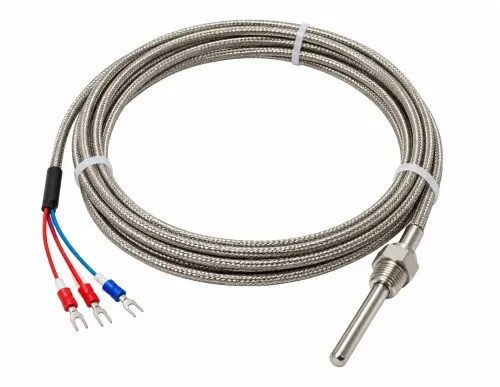
| RTD wiring | Two-, three-, or four-wire configuration, matched lead resistance, conductor resistance, and instrument compatibility | Lead resistance corrupting the measured temperature |
For RTD wiring, require four-wire data where long runs or small resistance changes demand accuracy; three-wire compensation works only with closely matched leads and a compatible instrument. Rewari Cable Industries is one supplier to ask for these construction and application documents rather than approving a fiberglass cable from its braid description alone.
Related products
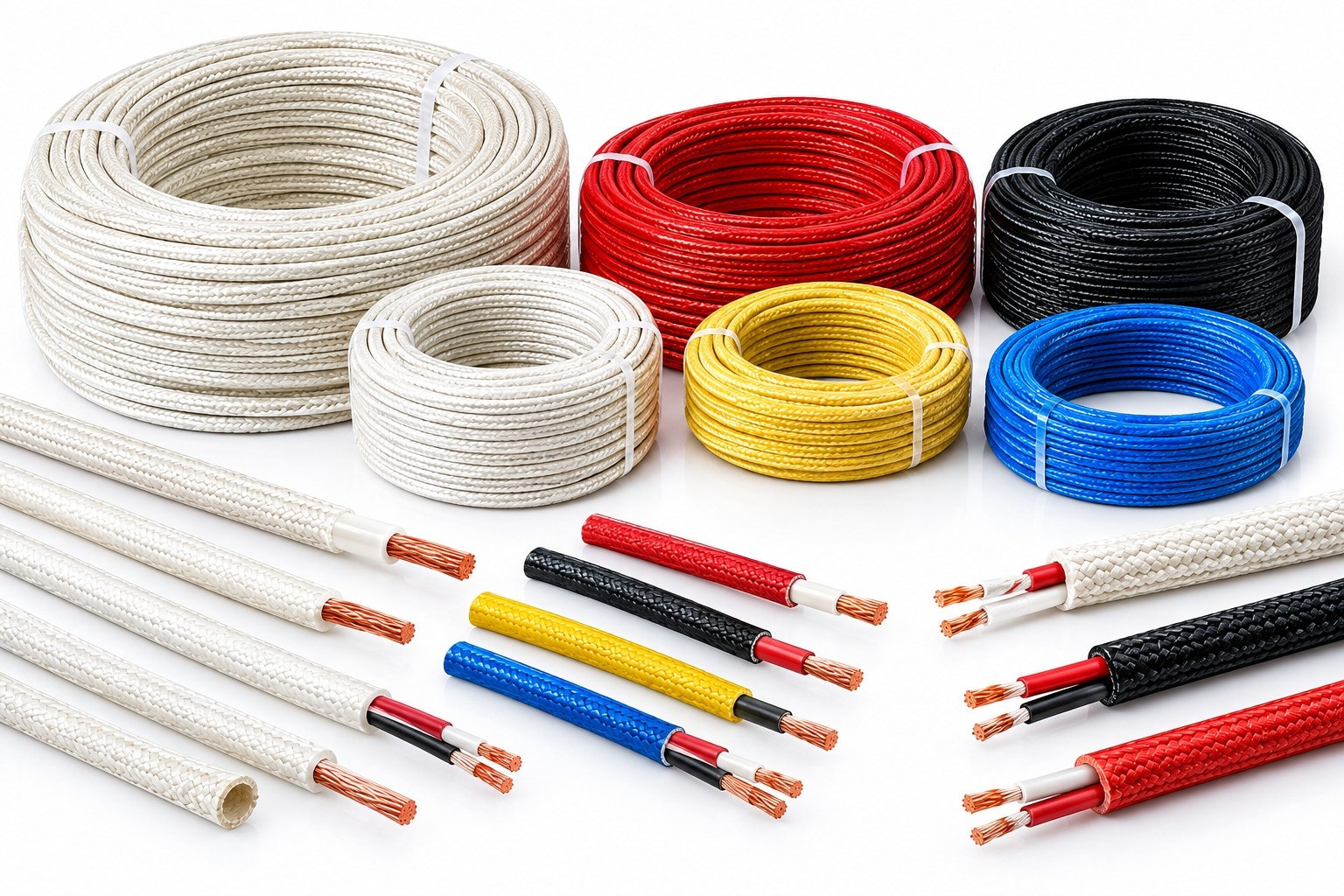 | Fiberglass Cable Rewari Cable Industries Fiberglass Cables and Fiberglass Insulated Wires are designed for electrical and industrial applications requiring... View product → |
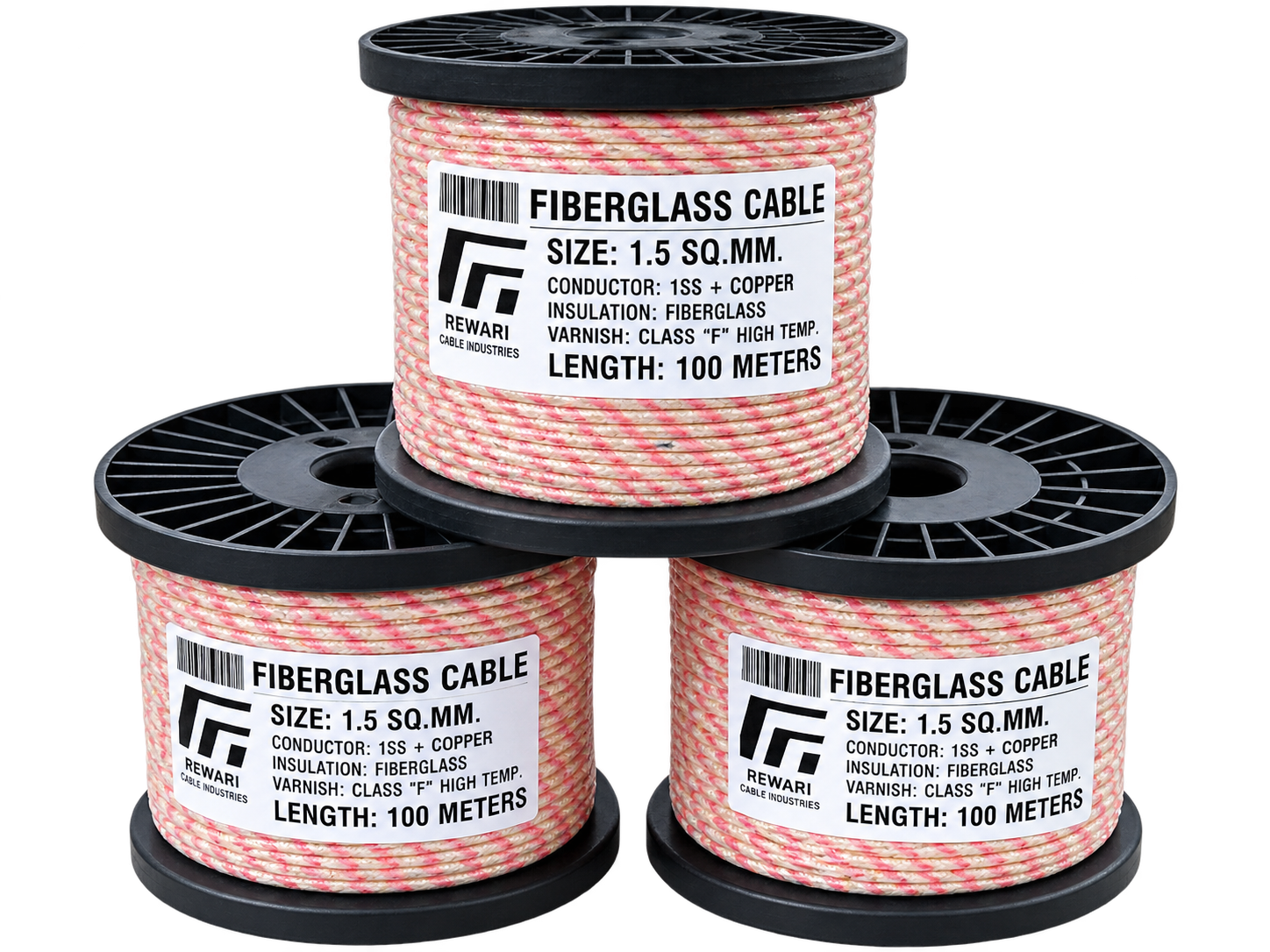 | Fibreglass Cable Rewari Cable Industries manufactures high-quality Fibreglass Cables designed for electrical applications requiring excellent heat resistance,... View product → |
Frequently asked questions
What installation conditions must you define before selecting high-temperature wiring?
Record circuit voltage, load current, conductor temperature, ambient temperature, duty cycle, and terminal temperature at the worst point in the installation. Include routing, enclosure heat, ventilation, and nearby heat sources.
Why is the insulation temperature rating not enough?
The complete system includes the conductor, primary insulation, fiberglass braid, varnish or coating, outer sheath, terminals, and seals. The lowest-rated component sets the usable limit, while bends, abrasion, contamination, and ageing can reduce performance.
How do movement and chemicals affect fiberglass cable selection?
Choose construction based on bend frequency, vibration, abrasion, oil, solvents, moisture, and cleaning agents. A rigid high-temperature cable is a poor choice for repeated flexing, and untreated fiberglass can lose protection when exposed to contamination or moisture.
How should you install and terminate high-temperature wiring?
Keep the cable within its bend radius, prevent braid damage, support it away from sharp edges, and avoid crushing it with clamps. Use terminals, ferrules, glands, and strain relief rated for the actual conductor and terminal temperature.
What should you request from a fiberglass cable manufacturer before approval?
Request the construction drawing, conductor material and size, insulation and braid materials, temperature ratings, voltage rating, bend guidance, chemical compatibility data, test reports, batch traceability, and dimensional tolerances. Confirm that the documents cover the exact cable construction you will purchase.
Related products
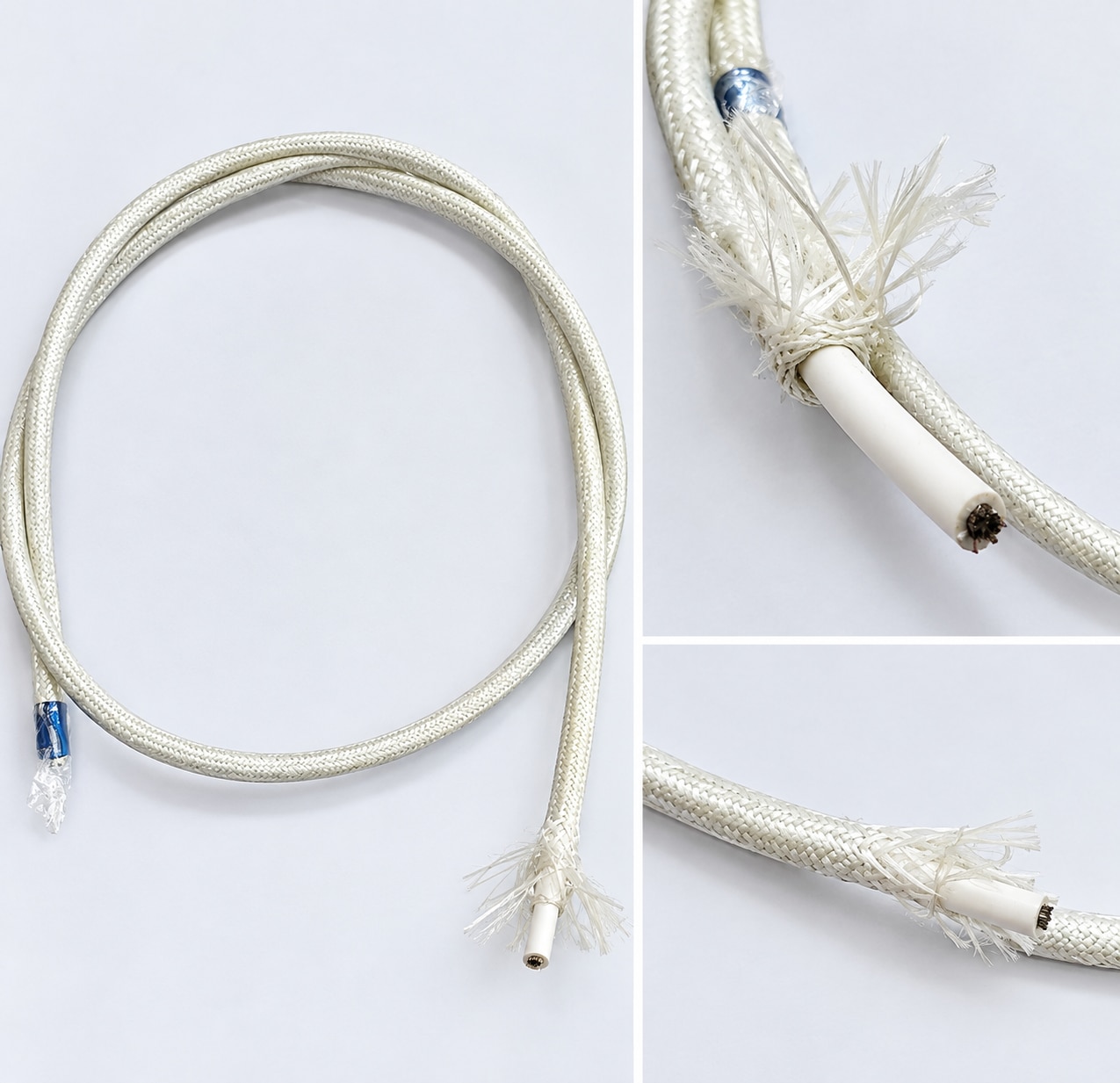 | Silicone Wire Rewari Cable Industries Silicone FG Cables are high-temperature, flexible electrical cables designed with silicone rubber insulation and fiberglass... View product → |
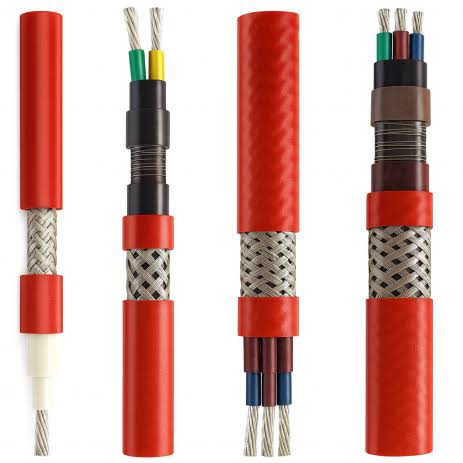 | Heat Trace Cable Rewari Cable Industries offers Heat Trace Cables for controlled electric heating, freeze protection, and process temperature maintenance of pipes,... View product → |
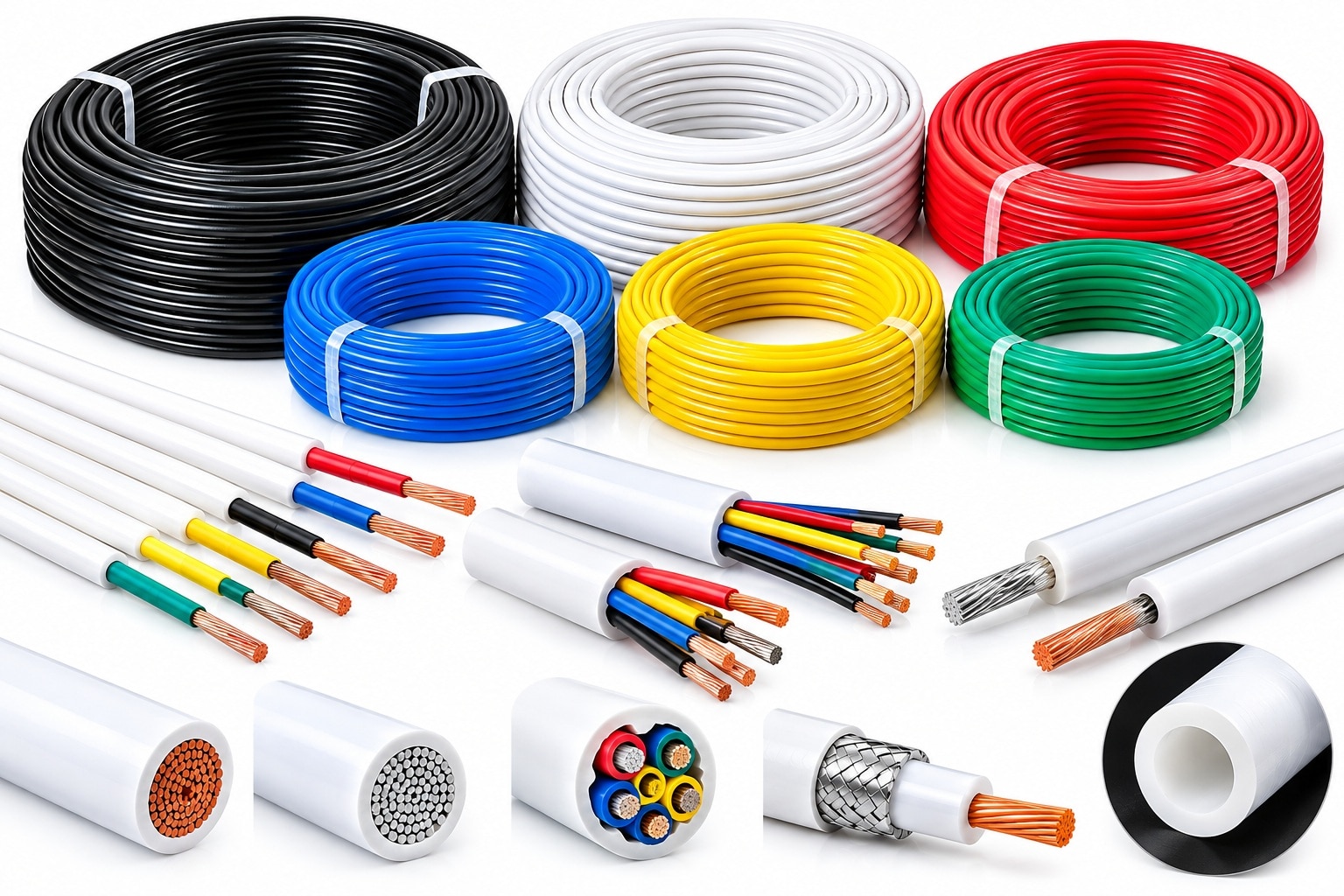 | PTFE Teflon Cable Rewari Cable Industries offers PTFE Teflon Cables designed for electrical wiring and industrial applications where high-temperature performance,... View product → |
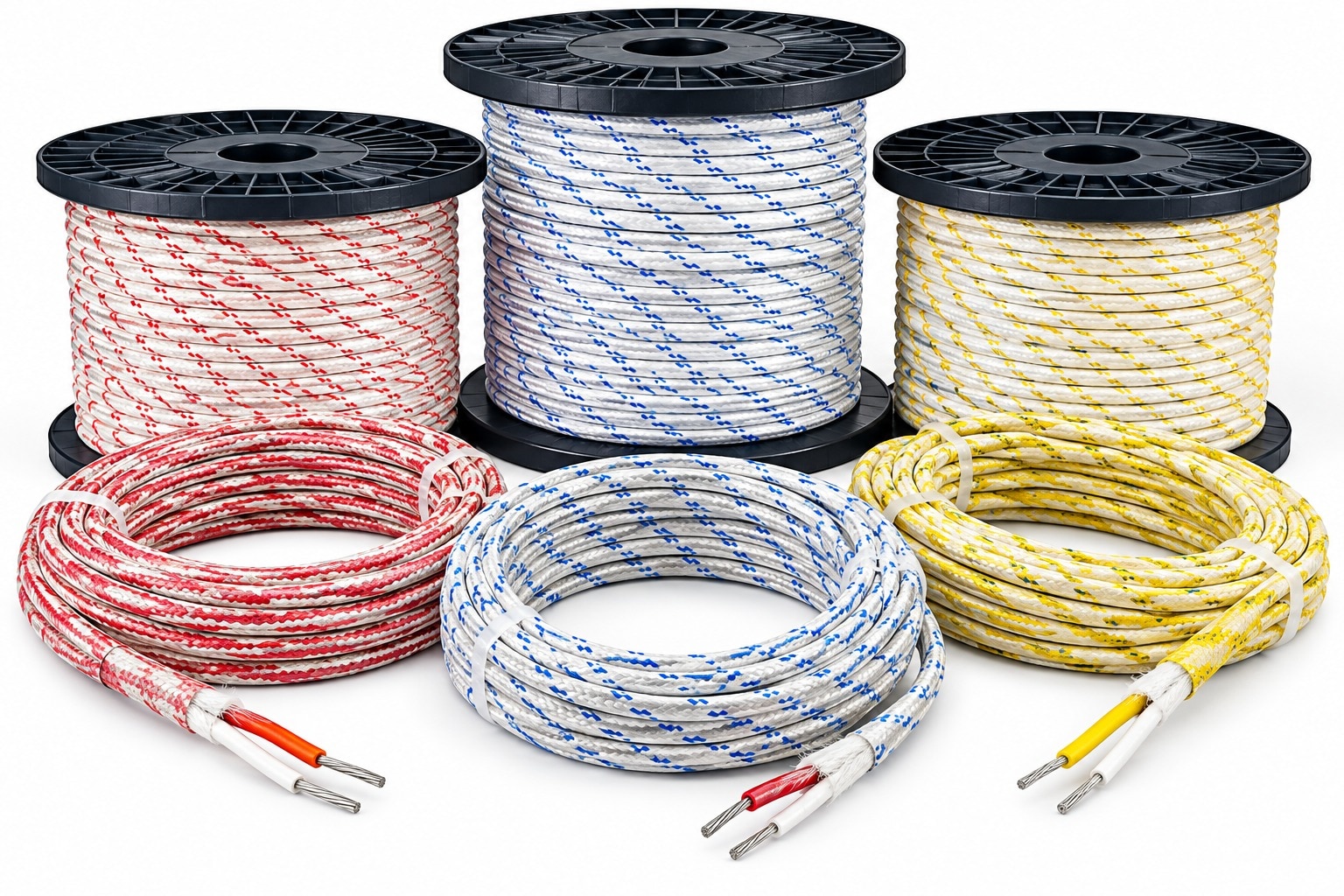 | Thermocouple Fiber Cable Rewari Thermocouple Fiber Cable Rewari Rewari Cable Industries offers high-quality Thermocouple Fiber Cables designed for temperature measurement and signal transmission in demanding... View product → |